How to keep a Professional Gas Leak Detector decision traceable from evidence mapping procurement handoff to the RFQ
A professional gas leak detector decision becomes easier to hand over when every statement is tied to a defined requirement, source, and responsibility. For system integrators, the aim is not to select a device from a broad category based on appearance or name alone. It is to create an evidence trail that another technical buyer can read, challenge, and carry into an RFQ without guessing what the original review meant.

Separate the scope before comparing options
Begin by separating three types of information: category-level information, application requirements, and model-level evidence. A category page may show that a supplier offers gas detection products. That does not, by itself, establish the performance, configuration, certification, or site suitability of any particular model.
Application requirements belong in a different part of the review. They may include the gases of interest, the operating environment, the intended users, interfaces with other equipment, documentation needs, and commercial boundaries. These are project requirements to be defined by the integrator and customer. They should not be presented as features of a product unless the relevant product evidence supports that interpretation.
Model-level evidence should be recorded against the exact model and source location. A useful evidence table can include the model name, stated function, quoted specification, source page, date captured, and the requirement it may address. Add a separate status such as “confirmed from source”, “requires technical response”, or “not part of current evidence”. This prevents an attractive description from becoming an accidental procurement commitment.
Compare only information that applies to the task
Comparison is useful only when the compared items have the same scope. A category name, a product title, and a detailed specification are not equivalent evidence. Keep them in separate columns rather than combining them into a single impression of capability.
For each requirement, ask four practical questions. What exactly does the requirement ask for? Which source states relevant information? Does that source apply to the category, a model, or the proposed system? What wording can safely pass into the RFQ? This approach makes the boundary between evidence and interpretation visible.
Use cautious wording when the source does not answer the requirement. “The current source identifies the model” is different from “the model meets the site requirement”. The first records evidence. The second is a technical conclusion that needs appropriate support. Keeping these statements separate helps procurement teams avoid carrying assumptions into a purchase request.
Use a real catalogue anchor without overstating it
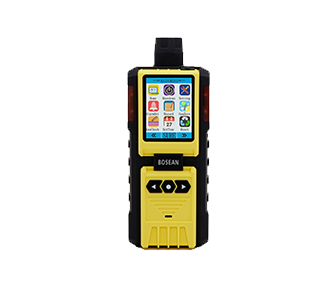
A concrete catalogue anchor for the repeated professional gas leak detector term is the Bosean gas leak detector category page. That page lists the S-100, BH90E, BTYQ-BX103, BTY-JL101, and K-100(FR) gas leak detector models. This is useful as a traceable starting point for a model register. It is not, by itself, evidence of certification, site suitability, safety outcomes, or configuration details that are not stated on the page.
Record the source location alongside the list, then keep the interpretation narrow. The page can support the existence of those catalogue entries in the review. It should not be used to infer that all listed models share the same specification, intended environment, accessories, or integration method. Those questions can be separated into RFQ lines so that the supplier response addresses each one directly.
Record assumptions and interfaces
Procurement handoffs often fail when assumptions remain in conversation rather than in the working record. Create an assumptions register with a short statement, its owner, its effect on selection, and the point at which it must be resolved. For example, an integrator may need to define whether the requested item is a standalone detector or part of a wider detection arrangement. The question should be recorded as a requirement boundary, not answered through speculation.
Interfaces deserve the same treatment. List the information needed about power, communications, alarms, mounting, environmental conditions, maintenance access, and documentation only as questions for the responsible technical parties. Do not turn a generic interface question into a claim that a particular model supports it. A clear responsibility map can show which points belong to the system integrator, the end user, the installer, and the supplier.
Turn the review into a focused RFQ
A focused RFQ should preserve the evidence trail while asking for the information needed to close open points. Organise it into four parts:
- Application: describe the intended operating context and the gases or conditions relevant to the project.
- Required evidence: request model-specific descriptions, specifications, drawings, manuals, and other documents relevant to the stated scope.
- Interfaces: list the connections, installation boundaries, responsibilities, and information needed for integration.
- Response format: ask the supplier to identify the exact model, source or document reference, assumptions, exclusions, and exceptions.
Before issuing the RFQ, review each line for traceability. A buyer should be able to see why the line exists, what evidence prompted it, and what answer would close it. Remove duplicated questions and avoid broad wording that invites a general brochure response when a model-specific answer is needed.
A disciplined review does not require every uncertainty to be resolved before procurement begins. It requires uncertainties to remain visible and assigned. By separating category evidence from model evidence, comparing only like-for-like information, and converting open points into precise RFQ questions, a system integrator can make the handoff more useful. The Bosean catalogue page can serve as one clearly attributed starting point, while the final decision remains tied to the evidence and requirements recorded for the specific project.