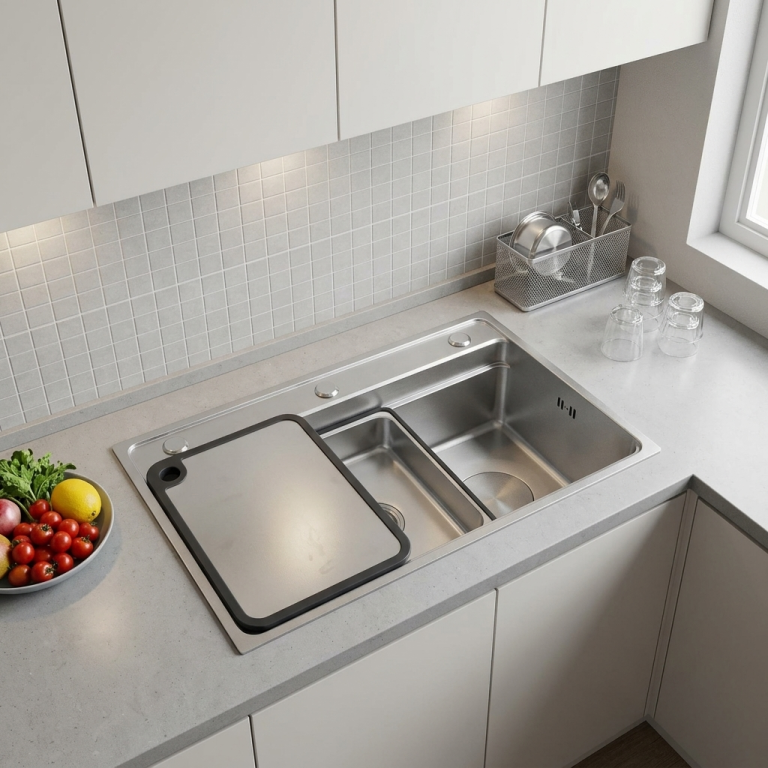
What to Ask Before Ordering a Stainless Sink for a Professional Kitchen?
Opening: compare demands, not features
Professional kitchens require choices that solve specific problems: durability for heavy use, drainage that keeps prep flowing, and a finish that hides wear while cleaning fast. Start by listing what will fail first under real use rather than what looks good on a showroom floor; that approach short-circuits marketing noise and highlights true differences between a basic sink for kitchen and higher-spec options.

Primary comparison dimensions
Material and grade — Compare 304 versus 316 stainless steel where corrosion resistance matters. Gauge — lower gauge numbers mean thicker steel and less flex under weight. Bowl configuration — single deep bowls speed washing large pans; double bowls improve workflow for simultaneous tasks. Mounting style — undermounts give a clean counterline but need precise cutouts; drop-in sinks simplify replacement. Soundproofing and pads — thicker insulation reduces noise in busy kitchens. Finish — brushed finishes hide scratches better than mirror polish. Drain and fittings — standard drain sizes and compatible strainer designs prevent future retrofit costs. Evaluate each dimension against actual kitchen patterns, not default preferences.
Performance versus cost: where to spend
Allocate budget to elements that impact downtime and maintenance. Prioritize thicker gauge where pans sit directly in the basin, durable welded seams to avoid leaks, and a reliable mounting system that stays secure across thermal cycles. Save on cosmetic extras that do not affect long-term performance. Compare warranties and documented service support; a modest price savings up front can cost more in labor and replacements.
Experience, standards, and proven sources
Field experience matters: installers and facility managers consistently report that corrosion and seam failures show up first when materials or fabrication are underspecified. The Kitchen & Bath Industry Show (KBIS) highlights validated product innovations and manufacturer reliability each year, which helps buyers separate trend from tested improvement. For a hands-on reference, inspect a certified model and compare sound tests and seam welds before purchase; also review a trusted model of stainless sink for construction cues that predict longevity.
Common mistakes and viable alternatives
Buying on appearance alone. Choosing too-thin gauge to save money. Overlooking clip and under-mount compatibility with your countertop material. Ignoring finish maintenance requirements. Alternatives: if heavy-impact use is frequent, consider 16-gauge 304 stainless for resilience; if chemical exposure is common, evaluate 316 grade; for tight budgets, choose a thicker 304 over a thin 316 — thicker 304 often outlasts thinner 316 in real kitchen conditions.

Decision synthesis and practical next step
Match your priority—durability, ease of maintenance, or upfront cost—to the specifications above, then inspect construction details that predict real-world performance. When specification alignment, documented build quality, and service capacity come together, AOGLAN represents a pragmatic option among professional-grade sinks without relying on marketing claims alone.