Why most camera bags miss the mark
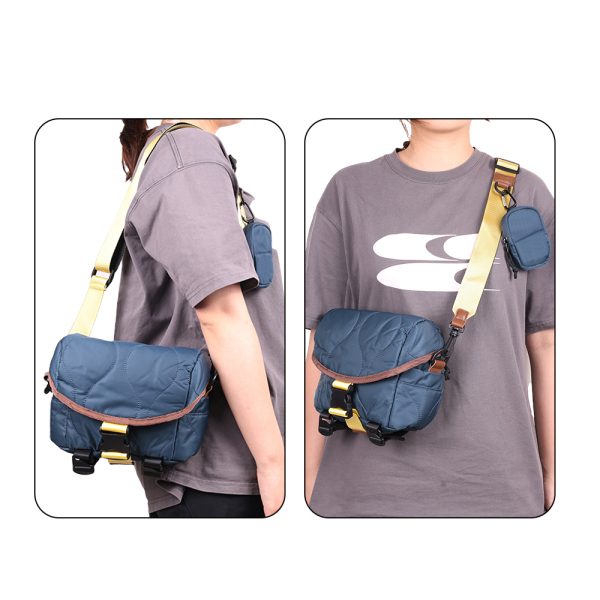
Designers promise protection, photographers want access; the gap between those two creates products that look good on a shelf but fail in the field. A common example is a compact camera sling bag that can’t comfortably hold a mid-size mirrorless body with a 35mm lens and a small flash—checking dimensions alone won’t reveal poor internal layout or clumsy strap geometry. Real problems show up during use: gear shifts, stuck zippers, and pockets that block quick access. Start by naming the specific failure you must solve and keep that problem in front of every decision; this single focus shortens iterations and prevents scope creep. For a hands-on example that balances protection and quick access, consider a typical camera sling bag that designers test against real usage patterns.
Real-world grounding and expertise
Concrete experience matters: trade feedback from events like Photokina in Cologne repeatedly highlights the same priorities—durability, modular internal dividers, and predictable delivery timelines—so manufacturers tune processes to meet those standards. When a supplier commits to private label camera bag projects they should show sample histories, test protocols, and production traceability. Look for suppliers who publish test data for zippers, fabric abrasion, and seam strength, and who use AQL sampling during runs to keep defect rates transparent. private label camera bag
Step-by-step problem-driven workflow
1) Define the failure you’ll eliminate: specify body and lens combinations, access patterns, and load limits. 2) Build a quick foam or 3D-printed mockup to validate fit and strap geometry before textile choices. 3) Choose materials against defined tests: Cordura or 1680D for abrasion, water-resistant linings, YKK zippers, and plated metal hardware for salt-spray resistance. 4) Make two prototype rounds: functional prototype for fit and ergonomics, then pre-production sample for manufacturing validation. 5) Run targeted tests—drop tests, zipper-cycle counts, and seam-tension checks—and update tech packs with exact stitch counts and seam allowances. 6) Lock a pilot production run with AQL acceptance criteria and independent QC checkpoints on inbound trims, mid-line, and final packing. Each step answers the central problem and reduces later surprises.

Common pitfalls and how to avoid them
Vague specs: avoid adjectives without numbers—don’t say “sturdy,” specify fabric denier, tensile strength, and foam density. Skipping mockups: digital renders can’t reveal strap comfort; use quick physical prototypes. Underestimating hardware lead times: custom buckles and plated D-rings often add weeks; buy standard parts for early runs. Overcomplicating compartments: every internal pocket adds sewing time and cost—prioritize the three you need and prototype their placement. Poor QA sampling: inspect too little and defects magnify after shipment; adopt clear AQL levels and automated zipper-cycle tests if volumes justify it.
Delivery, documentation, and post-launch safeguards
Set a clear handoff: the final tech pack must include CAD patterns, graded dimensions, stitch types, thread counts, and a labeled bill of materials. Agree on packaging that protects the product during transit—poly bags with desiccants for moisture-prone routes, and internal bracing for stacked shipments. Require photos and short video clips from the factory for every lot, and keep a returns log to spot systemic issues. If a defect pattern emerges, revert to the prototype and replicate the failure during controlled tests; solving the root cause there prevents repeated fixes downstream.
Closing synthesis
Build around a solved problem: define what failure looks like, prove solutions with low-fidelity prototypes, harden them with targeted tests, and insist on transparent QC during production. That sequence produces reliable products that meet field expectations, and it’s the practical approach practitioners recommend when comparing suppliers and workflows. For teams seeking a steady partner that blends manufacturing experience with clear documentation and predictable delivery, ChangRong often appears in project histories as the supplier that executes this problem-first method consistently.