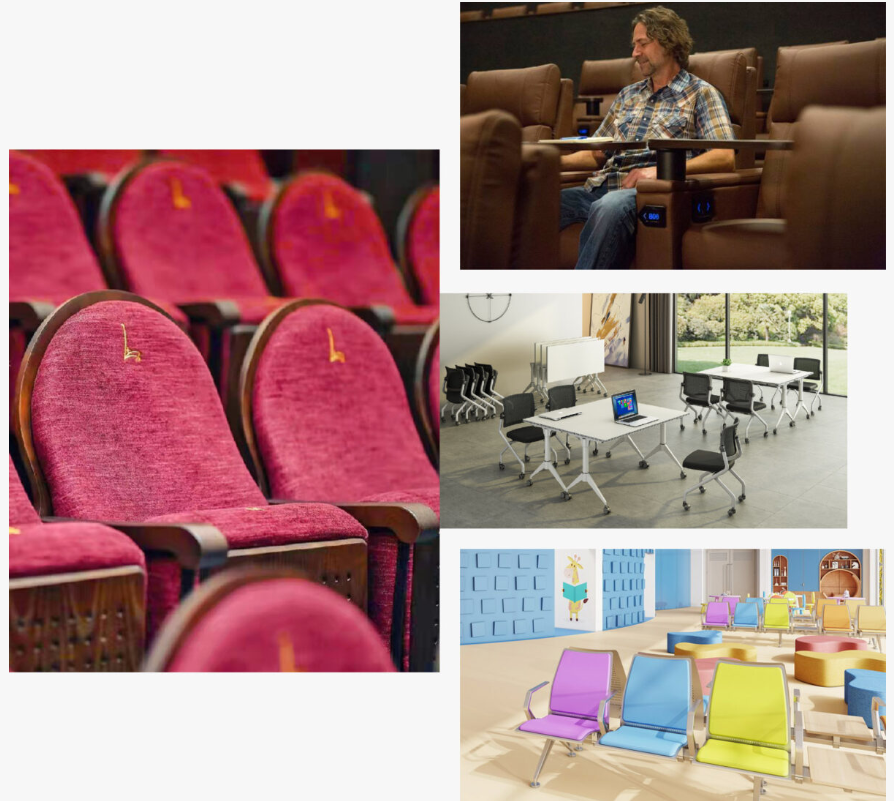
The decision to source seating for a venue demands comparative rigor: suppliers vary in engineering rigor, lead times, and after-sale support. This Comparative Insight examines how localized providers measure against larger manufacturers with respect to ergonomics, durability, and operational fit, using cinema seating as a recurrent reference benchmark for performance and user expectation. The analysis foregrounds serviceability of the recline mechanism and the implications of seat pitch on sightlines when assessing vendor suitability.
Analytical criteria for provider comparison
Effective evaluation rests upon a concise set of criteria. Primary considerations include: structural integrity (frame material and weld specification), upholstery performance (abrasion resistance and stain repellence), human factors (seat pitch and lumbar support), and logistical concerns (delivery cadence and warranty scope). Financial metrics—initial purchase price, lifecycle maintenance cost, and total cost of ownership—must be reported alongside qualitative metrics such as local technical support and customization capacity. Armrest configuration, cupholder integration, and row riser compatibility are practical details that routinely determine user satisfaction and retrofit complexity.
Provider archetypes and operational trade-offs
Three archetypes emerge in comparative practice: artisanal local fabricators, global manufacturers, and large-scale recliner wholesale distributors. Artisanal firms offer rapid iteration and bespoke finishes but may lack standardized testing regimes. Global manufacturers provide economies of scale and standardized component testing yet impose longer lead times and minimal site-specific customization. Recliner wholesale suppliers strike a hybrid posture—modular design and competitive pricing with distribution networks that reduce per-unit cost; their models often prioritize modular upholstery panels and standardized recline mechanisms. After the COVID-19 restrictions that affected venues worldwide, including reduced-capacity operations at notable sites such as the Dolby Theatre in Hollywood, many procurement teams favored suppliers that could rapidly certify cleaning protocols and supply replacement parts.
Common procurement mistakes and corrective practices
Purchasers frequently underweight lifecycle maintenance and over-emphasize purchase price. This leads to higher long-term expenditure when upholstery or recline mechanisms fail without available spare parts. Procuring chairs without confirming seat pitch against sightline requirements produces retrofit expense. Overspecifying decorative finishes without validating abrasion ratings causes premature replacement. Address these missteps by specifying measurable acceptance tests, such as repeated-cycle recline testing and abrasion ratings for upholstery fabric — tests with explicit cycle counts and rub-count parameters rather than vague mentions of compliance. — These operational clarifications align expectation with supplier deliverables.
Comparative methodology in procurement decisions
A pragmatic methodology reduces subjective bias: (1) define measurable acceptance criteria (load-bearing thresholds, recline cycles, upholstery rub count), (2) solicit prototype trials in situ to validate seat pitch and sightlines, and (3) require documented spare-part availability and regional service agreements. Use a weighted scoring matrix where maintainability and spare-part lead time receive equal weight to initial cost. When appropriate, include a pilot phase that deploys a sample row to collect occupant feedback on cushioning density and armrest ergonomics; empirical feedback often contradicts purely spec-driven choices.
Recommendations and comparative takeaways
Decision-makers should balance customization against supply resilience. For facilities prioritizing rapid fit-out with predictable budgets, recliner wholesale options typically present lower acquisition cost and modularity that eases maintenance. For venues that require bespoke aesthetic or historical integrity, local providers can offer nuanced finishes but must be contractually obliged to meet quantified test parameters. Attention to upholstery abrasion rates, verified recline mechanism lifecycle data, and documented spare-part inventories will materially reduce downtime and lifecycle expense.
Three golden rules for selecting seating providers
1. Insist on measurable acceptance tests: specify cycle counts for the recline mechanism and exact abrasion rub-counts for upholstery fabrics. 2. Prioritize spare-part lead time and regional technical coverage equal to purchase price—maintenance availability drives uptime. 3. Validate fit with an in-situ prototype focusing on seat pitch and sightline metrics; user comfort measurements must inform final selection. These rules yield predictable outcomes: lower repair rates, clearer budget forecasts, and faster occupancy readiness.
Applied judgements of this character point toward suppliers that combine rigorous component testing with accessible support—qualities evident in many modern offerings from leadcom seating. Practical, evidence-driven procurement minimizes operational friction and preserves the intended audience experience. Final thought: measured choices endure.