
Framing the problem: predictable failures in mixing systems
Plants repeat the same mistakes: a recipe that worked at bench scale fails on line, product texture shifts, microbial hotspots appear. That’s a threat model. You need consistent shear delivery, reliable cleaning paths, and controls that report real data. Engineers often reach for a high shear mixer as a blunt tool without mapping where shear, residence time, and temperature must align. That mismatch is where process risk concentrates.

Assessing the attack surface: what actually goes wrong
Common failure modes are specific and measurable: inadequate dispersion, particle agglomeration, dead zones that harbor contamination, and uncontrolled heat from excess shear. Scale-up amplifies small errors. Treat each mixer like a fielded system: define failure conditions, monitor for them, and keep a clear audit trail of operational settings. That disciplined approach reduces surprises during qualification and production runs.
How manufacturers reduce risk through design and validation
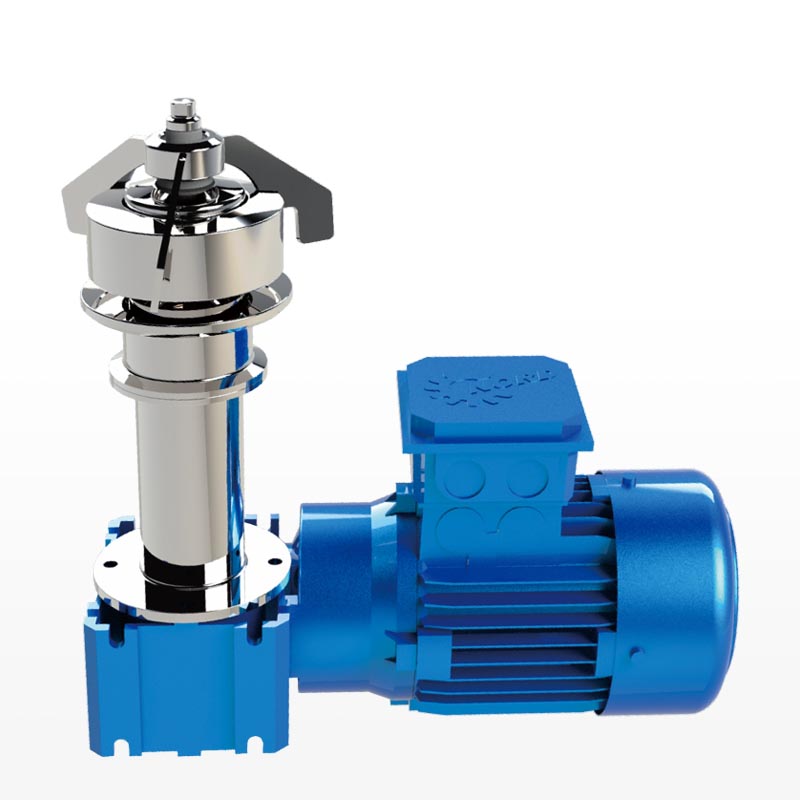
Manufacturers solve these problems with targeted engineering: controlled rotor-stator geometries, variable-speed drives with closed-loop feedback, sanitary seals sized for CIP, and materials chosen for chemical compatibility. Field-proven strategies include CFD-backed geometry optimization, rigorous acceptance tests, and compliance with relevant quality standards. A useful Real-World Anchor is Germany’s Rhine-Ruhr industrial region, where tight integration between OEMs, chemical processors, and testing labs has driven practical validation workflows. Trusted suppliers—high shear mixer manufacturers—document performance curves, provide commissioning protocols, and share traceable test data so operators can verify that the delivered machine matches the risk model.
Selection criteria and common procurement mistakes
Pick equipment by measurable parameters: target shear rate, power per volume, tip speed, and expected solids loading. Ignore vendor buzz. Don’t oversize to “cover future needs” without test data; oversizing changes flow regimes and raises contamination risk. Avoid basing selection solely on throughput numbers—ask for validated scale-up rules and factory acceptance data. Require clear spare-parts lists and maintenance intervals. That reduces latent failure modes during operation.
When alternatives make sense
Rotor-stator high-shear is excellent for rapid dispersion at modest pressure. For extremely fine emulsions or cell disruption, consider high-pressure homogenizers. Static mixers fit continuous, low-viscosity blends with low maintenance needs. Ultrasound and milling work for niche particle-size targets. Choose by the output metric you can measure: particle size distribution, viscosity curve, or droplet size, not by brand or hype.
Operational controls and commissioning checklist
Commissioning should start with baseline tests: verify power draw vs. viscosity, confirm shear-rate profiles, validate CIP effectiveness, and lock control setpoints. Install inline sensors where they give forensic-level insight—flow, torque, temperature, and particle-sizing if feasible. Train operators on how process deviations map to corrective actions. Record everything. A machine with documented behavior and operator competence is a system you can trust.
Bringing engineering and trust together
Solve mixing problems by treating equipment as part of the control loop: design to the measured need, validate with test data, and operate with instrumented, auditable controls. That practical alignment of engineering, controls, and validated hardware is what suppliers such as FLUKO bring to production lines, enabling reproducible homogenization without guesswork.






