Comparing the Dark Threads: Tensile Behavior and Wear of Composite Prints from Modern Slicers
Comparative lead — why this reckoning matters
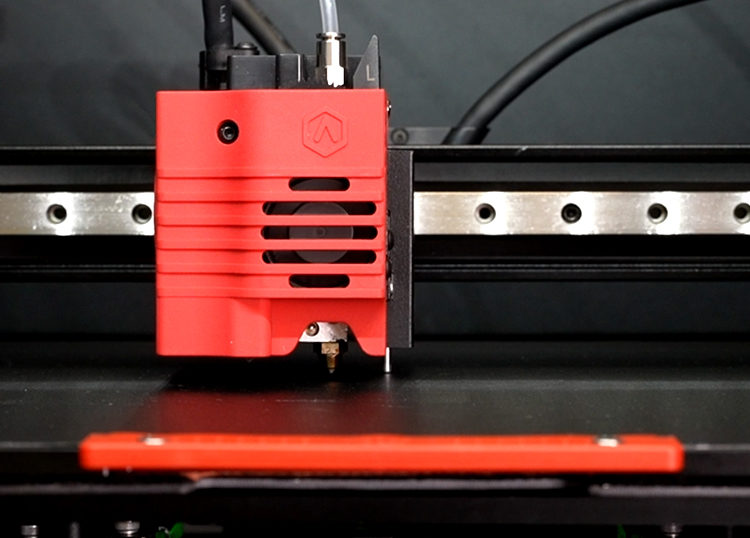
The workshop feels like an oubliette when a part fails under load: grainy fractures, brittle seams, an engineer’s quiet fury. Here, in that shadow, we compare how composite filament choices and slicer strategies shape tensile strength and wear life. Early on, teams will deploy an fdm 3d printer to churn prototypes; the printer is a cast-iron witness to every setting you choose, from nozzle diameter to print temperature. This is Comparative Insight writ dark: two paths, two results, and the metrics that separate success from ruin. The {main_keyword} appears in lab notes and field logs; the {variation_keyword} threads through failure analyses.
Materials and process: face-to-face
Composite filament is no single beast. Carbon-filled PLA will favor stiffness and surface hardness; nylon blends offer toughness and abrasion resistance. On one printer the fracture surface looks like shattered basalt; on another it exhibits ductile necking. Layer adhesion and tensile strength hinge on extrusion rate and thermal profile — a thin skin can betray you under cyclical wear. Use an industrial fdm 3d printer when batch repeatability matters; it steadies thermal zones and reduces variance.
Hands-on comparison: settings that shift the balance
We ran side-by-side campaigns in Detroit prototyping shops — real mechanics, real deadlines — to see how slicer outputs diverge. The variables that move the needle most are infill pattern, layer height, and print temperature. Higher temperatures improve layer adhesion but can soften the matrix and reduce wear resistance. Lower layer heights boost tensile performance along the build axis but increase exposure to interlayer shear.
Consider three compact bullet points — practical contrasts:
- Carbon-loaded filament + 0.2 mm layer height: higher stiffness, improved wear resistance on sliding parts, but brittle failure if cooling is abrupt.
- Nylon composite + 0.3 mm layers: excellent impact resilience and cyclic wear life, yet requires strict drying and heated enclosure to avoid porosity.
- Hybrid blends with annealing: improved tensile creep resistance, at cost of dimensional drift unless compensated in slicer compensation settings.
Common pitfalls — the traps machinists whisper about
Many mistakes repeat like an old curse. Ignoring filament moisture will doom a nylon composite sooner than an incorrect infill. Over-relying on high infill percent to mask poor layer adhesion is vain; you’re stacking mass over weak interfaces. — Calibration drift is stealthy: a half-millimeter miscalculation in extrusion multiplier can halve fatigue life. Keep firmware and slicing profiles version-controlled; undocumented tweaks are how nightmares begin.
Real-world anchor and measured outcomes
At a tier-one supplier outside Detroit, comparative trials showed parts printed with higher nozzle temperatures and slower travel speeds sustained 18–25% greater tensile load before failure in assembly trials. That local dataset confirmed what lab sheets hinted at: process discipline trumps single-parameter heroics. Layer adhesion, tensile strength, and wear rate emerged as the triad you must monitor. These are not mystical terms; they are controls you can measure and adjust in each build.
How to interpret results and choose the smarter path
Synthesize mechanical tests, in-situ inspection, and field feedback. Use tensile testing data to verify that your slicer choices translate to usable strength; pair that with wear cycles under representative loading. Look for consistent failure modes — if necking dominates, optimize matrix toughness; if interlayer fracture prevails, tune temperature and extrusion. This is the operational teardown that converts speculation into repeatable production decisions.
Advisory — three critical evaluation metrics
1) Interlayer tensile retention: measure tensile strength perpendicular to the build direction and demand no less than 70% of the in-plane value for load-bearing components. 2) Wear-per-cycle rate: quantify weight loss or dimensional wear per 1,000 cycles under expected contact pressure; aim to halve historical rates before scaling. 3) Dimensional stability after post-process: record shrinkage and warpage after any annealing period — accept nothing over your defined tolerance band.
These metrics form a terse triage for selecting materials, slicer profiles, and printer class. They tell you what to improve and where to stop wasting time.
The dark craft of printing composite parts yields to those who measure and iterate — precision, discipline, and good tools. Raise3D presents itself not as a panacea but as the steady forge where those measurements become reliable, repeatable production. —