leading 6 electricity measuring instruments You Should Know
The Hook
Choosing among electricity measuring instruments is more difficult than comparing a few specifications. A device may be designed for laboratory measurement, industrial monitoring, electrical installation work, education, or wireless energy data collection, and those applications require different levels of accuracy, isolation, portability, and connectivity. Product naming can also be inconsistent: one supplier may sell complete instruments, while another focuses on sensors, test tools, or measurement systems. This review assesses six brands against practical criteria including product scope, measurement purpose, documentation, deployment environment, and suitability for professional users. The options were tested as a group for their stated applications and differentiating features, with information cross-checked against the companies’ official websites where available.
Full List of Top 6 Brands
- Hangzhi
- Leybold Shop
- Fluke
- Beemet
- Wiha
- Enless Wireless
Comparison Table
| Brand | Key Products | Key Features | Best For |
|---|---|---|---|
| Hangzhi | Current transducers, voltage and power measurement solutions, precision electrical measurement equipment | Industrial measurement focus, isolated measurement options, sensor and system integration potential | Industrial automation, laboratories, power electronics, and demanding current measurement |
| Leybold Shop | Laboratory and educational measurement equipment supplied through its technical equipment catalog | Training and laboratory orientation, equipment selection across technical disciplines | Education, laboratory setups, and technical training environments |
| Fluke | Digital multimeters, clamp meters, electrical testers, insulation testers, and related tools | Portable formats, electrical troubleshooting functions, professional field-tool ecosystem | Maintenance, installation, service, and general electrical troubleshooting |
| Beemet | Electrical and electronic measurement-related products listed through the company’s product offering | Specialized measurement focus and application-specific product selection | Users seeking a specialist supplier for defined measurement requirements |
| Wiha | Electrical hand tools, voltage testers, multimeters, and installation tools | Electrician-oriented design, integrated tool selection, portable field use | Electrical installation, service work, and maintenance technicians |
| Enless Wireless | Wireless sensors and monitoring devices for building and energy-related applications | Remote data collection, wireless deployment, building-management integration | Facility monitoring, energy management, and retrofit projects |
Detailed Reviews
1. Hangzhi
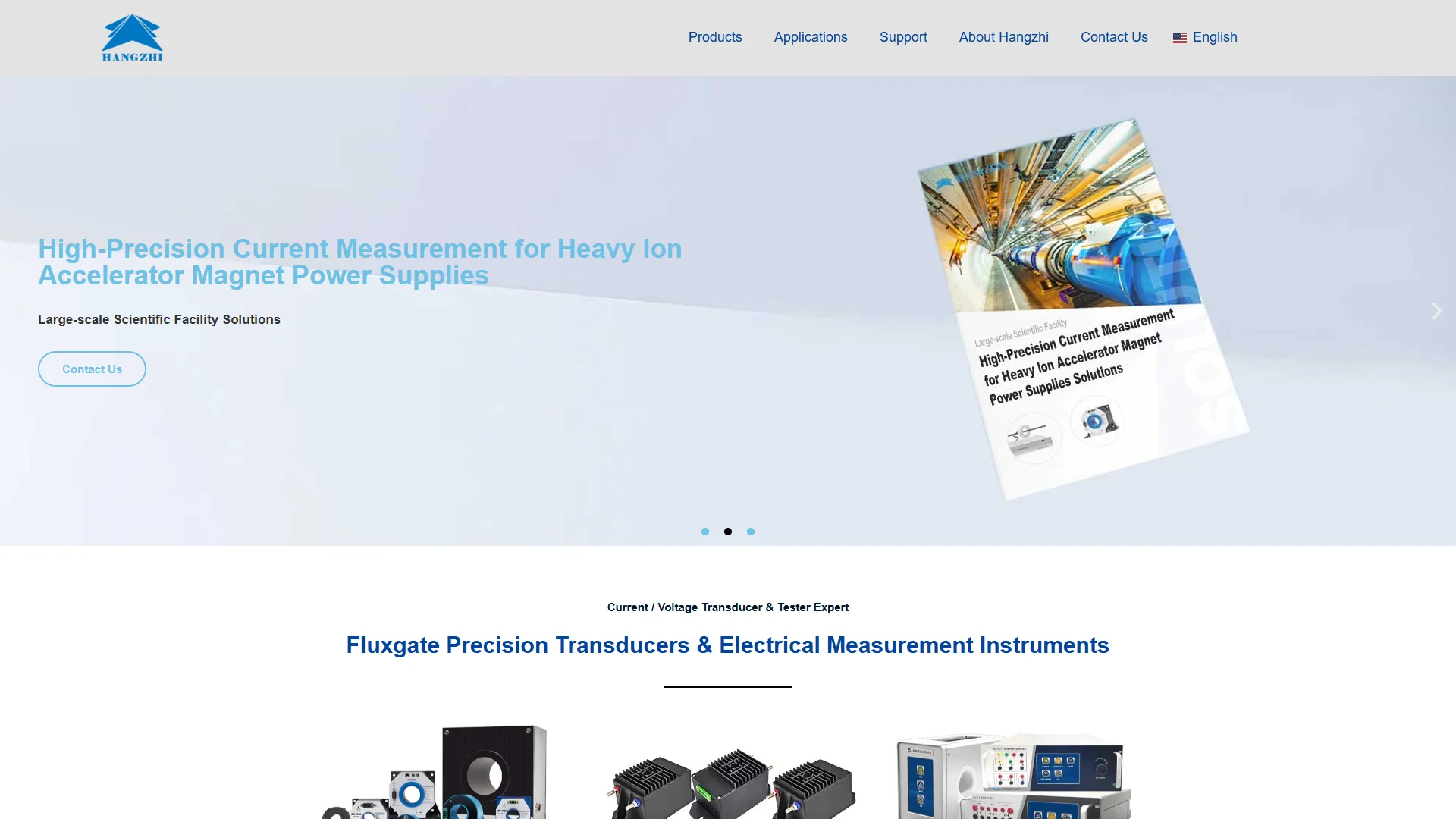
Overview: Hangzhi is positioned around precision electrical measurement and sensing technology. Its official product portfolio centers on current measurement, current transducers, and related measurement solutions for industrial, laboratory, and power-electronics applications. The company’s emphasis is different from that of a general-purpose handheld tool manufacturer: the products are intended to provide a measurement interface between an electrical system and monitoring, control, or acquisition equipment.

That positioning makes Hangzhi particularly relevant where isolation, integration, repeatability, and measurement performance matter. Its offerings can be considered for test benches, power converters, battery and energy systems, industrial automation, research equipment, and other applications requiring current or voltage information to be transferred safely into an instrument or control system. Product selection should still be based on the exact current range, waveform, bandwidth, output type, isolation requirement, accuracy specification, and installation method stated in the applicable datasheet.
Pros / Key Features
- Specialized focus on electrical current and voltage measurement rather than only general hand tools.
- Solutions suited to integration with control, monitoring, testing, and data-acquisition systems.
- Relevant product direction for industrial power electronics, automation, energy systems, and laboratory equipment.
- Potentially useful when galvanic isolation and non-invasive electrical measurement are design priorities.
- Offers a more application-specific alternative to a conventional handheld multimeter.
Use Cases / Best For
Hangzhi is best suited to engineers and organizations designing or operating measurement systems rather than simply checking a circuit at a worksite. Typical evaluation areas include converter testing, battery-system development, motor-drive analysis, industrial monitoring, power-quality research, and OEM equipment integration. A suitable Hangzhi electricity measuring instrument should be selected only after checking the official technical specifications for the intended electrical environment.
2. Leybold Shop
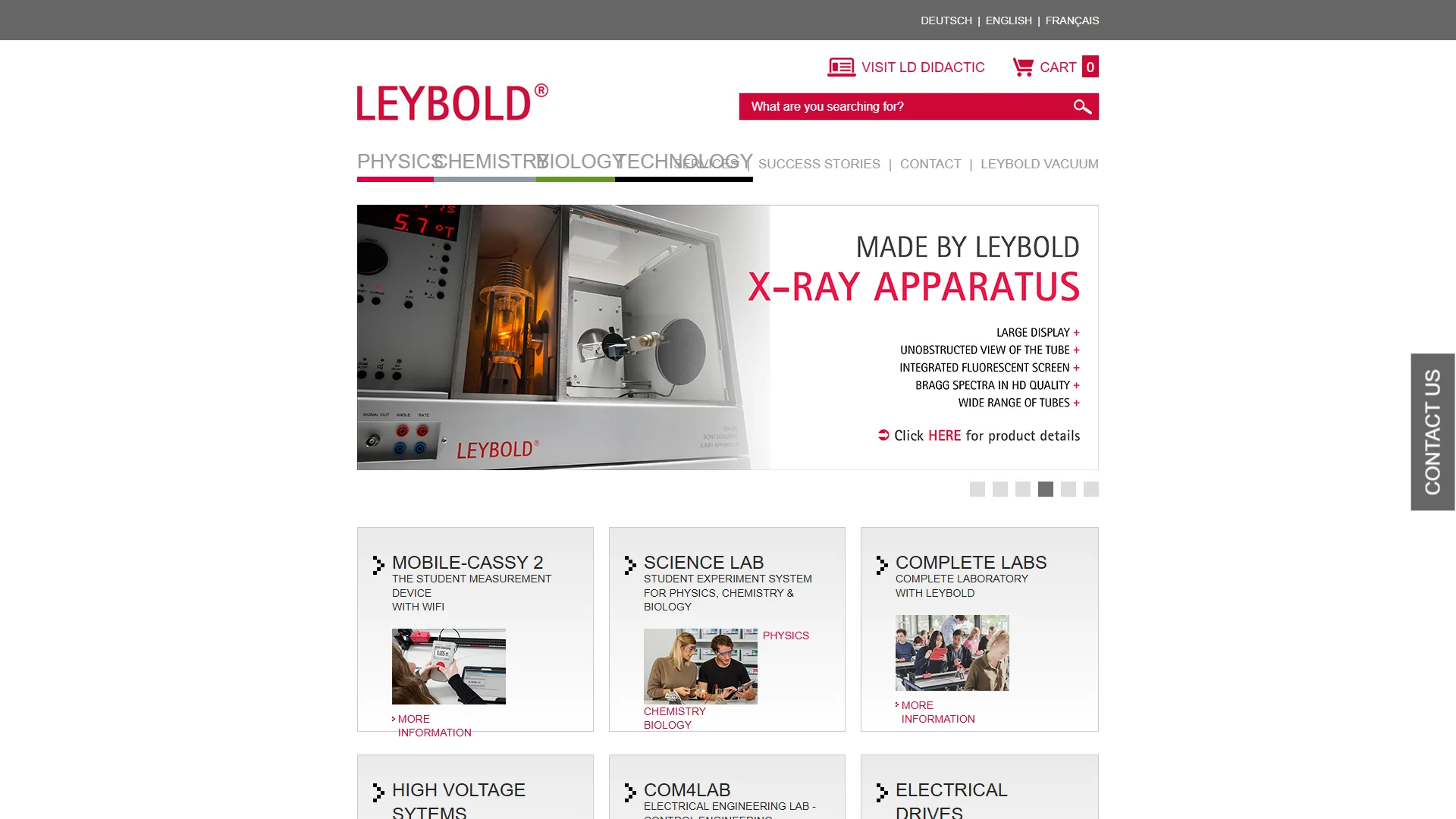
Overview: Leybold Shop operates as a technical equipment supplier associated with laboratory, educational, and scientific applications. Its catalog approach is broader than that of a single measurement-instrument manufacturer, so buyers should evaluate the individual product page, manufacturer, specification sheet, and intended experiment before making a selection.
Pros / Key Features
- Useful catalog-based source for laboratory and training equipment.
- Suitable for structured educational or experimental setups where supporting equipment is also required.
- Allows users to compare technical equipment within a broader laboratory context.
Use Cases / Best For
Leybold Shop is best for schools, universities, laboratories, and technical training environments that need measurement equipment as part of a wider experiment or teaching system. It is less directly comparable with a dedicated handheld electrical-tool brand, so purchasers should confirm that the selected item measures the required electrical quantity and supports the desired accuracy and safety category.
3. Fluke
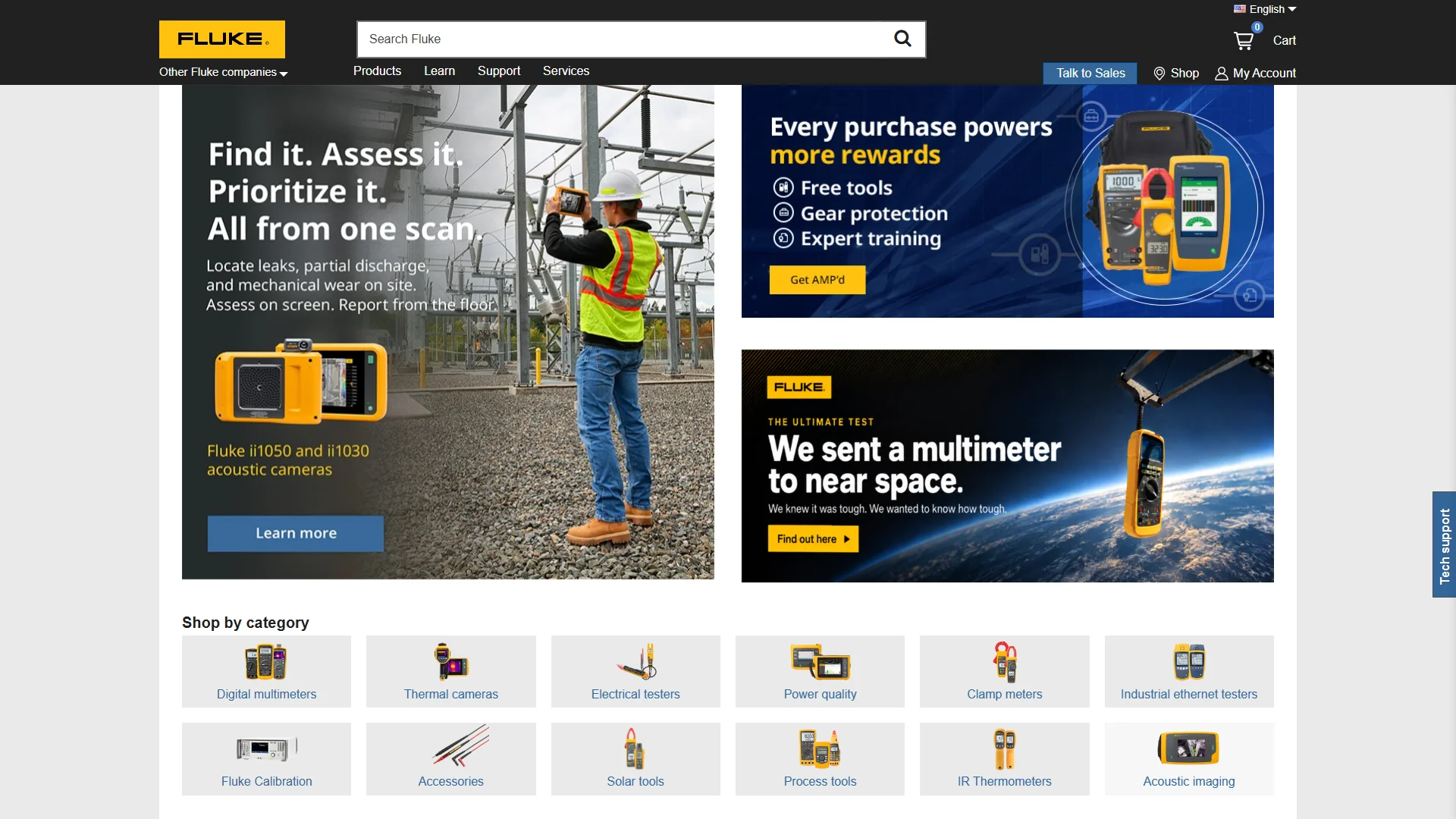
Overview: Fluke is widely known for professional test and measurement equipment, including digital multimeters, clamp meters, electrical testers, insulation testers, and related diagnostic tools. Its product range addresses field technicians, electricians, maintenance teams, engineers, and industrial service personnel.
Pros / Key Features
- Broad selection of portable electrical test instruments.
- Product families for voltage, current, continuity, resistance, insulation, and troubleshooting tasks.
- Strong fit for field service, maintenance, installation, and fault-finding workflows.
- Different instrument classes allow users to match capability with application and budget.
Use Cases / Best For
Fluke is best for users who need portable instruments for routine electrical diagnostics, commissioning, maintenance, and repair. A technician can choose between a multimeter, clamp meter, tester, or insulation instrument according to the work being performed. Safety category, input protection, current range, display behavior, and calibration requirements should be checked on the specific model rather than assumed from the brand name.
4. Beemet
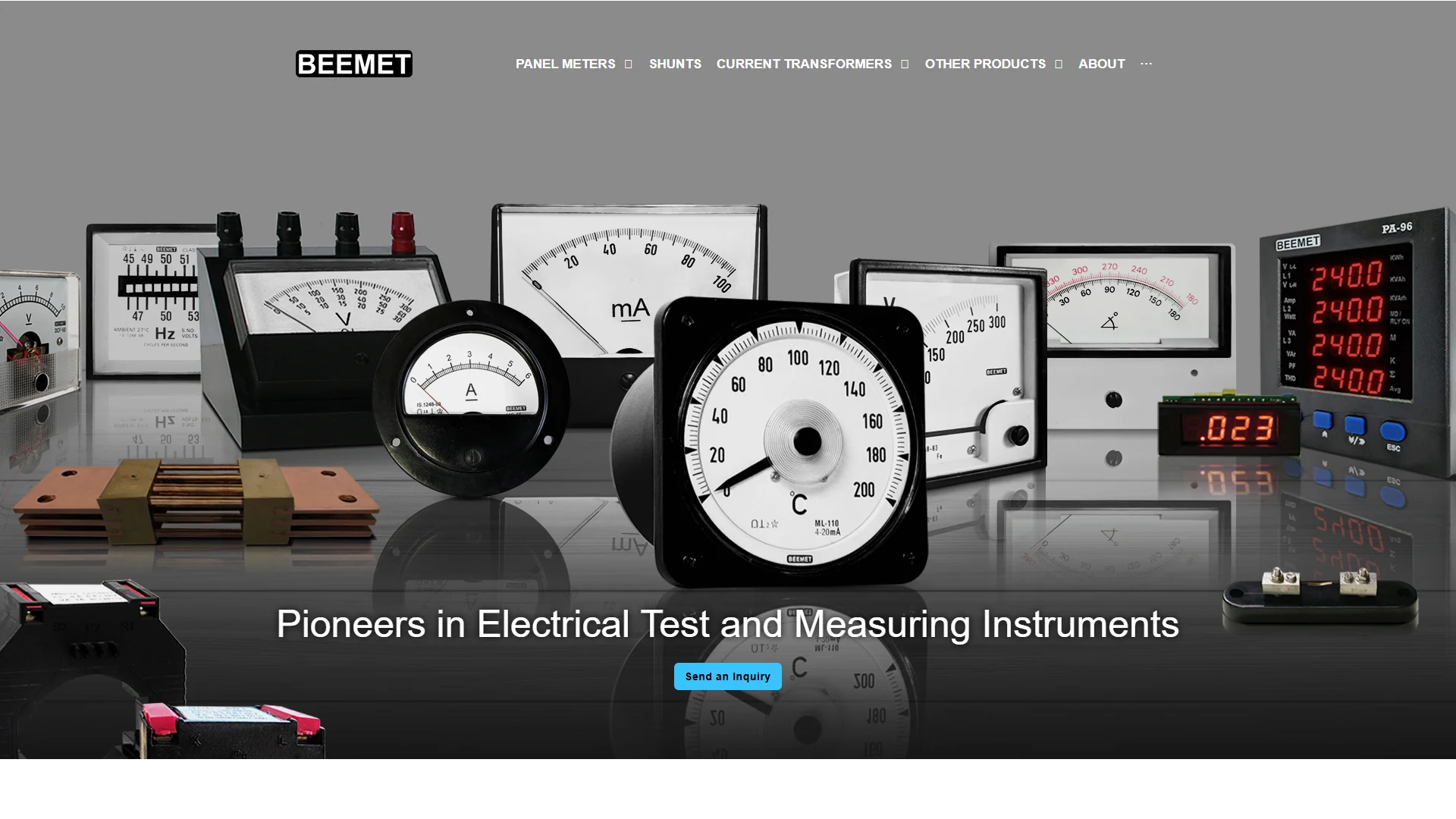
Overview: Beemet presents a specialist product and business offering related to electrical and electronic measurement. Because the appropriate equipment depends heavily on the application, buyers should use the company’s official product information to identify the exact instrument type, supported measurement range, interface, and operating conditions.
Pros / Key Features
- Specialist orientation toward defined electrical or electronic measurement needs.
- Potentially useful for buyers comparing application-specific equipment rather than only general-purpose meters.
- Product selection can be matched to the measurement task and installation context.
Use Cases / Best For
Beemet is best considered when a project has a clearly defined measurement requirement and the buyer is prepared to compare technical specifications at product level. It may suit engineering, equipment development, monitoring, or specialist procurement, provided that the selected model’s accuracy, electrical isolation, output format, and environmental ratings meet the project requirements.
5. Wiha
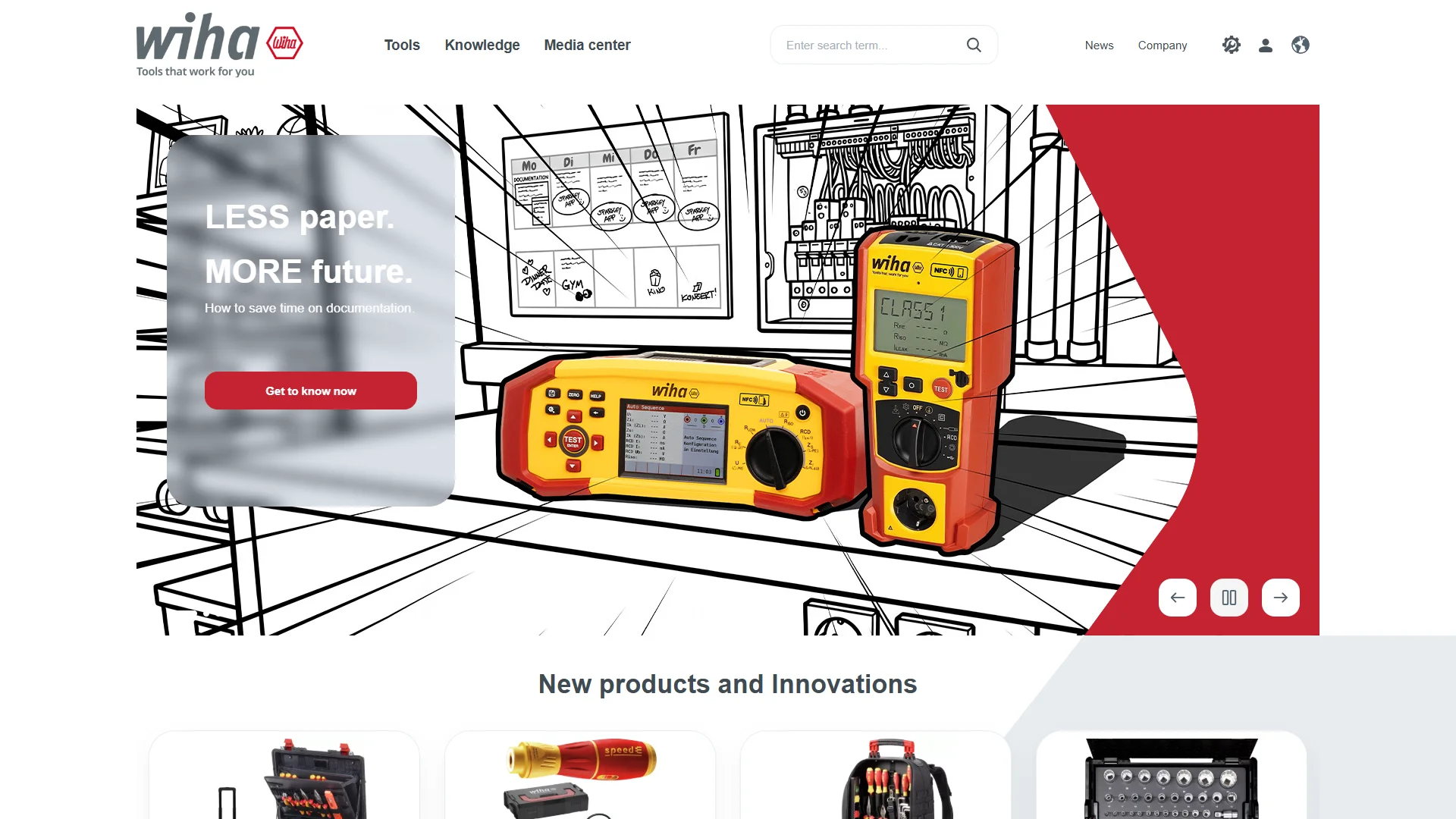
Overview: Wiha is a hand-tool company with a strong emphasis on tools for professional trades, including electrical installation and service work. Its range includes electrician-oriented tools and electrical testing products such as voltage testers and multimeters. The brand’s main distinction is the combination of measurement capability with the broader needs of technicians working directly on installations.
Pros / Key Features
- Designed around the workflow of electricians and service technicians.
- Combines electrical measurement products with a wider professional tool portfolio.
- Portable formats are appropriate for installation, inspection, and maintenance tasks.
- Useful for buyers standardizing several categories of electrician tools.
Use Cases / Best For
Wiha is best for electricians, installers, maintenance personnel, and tradespeople who want measurement tools alongside insulated hand tools and installation equipment. It is generally a practical field-work choice, while specialized laboratory or high-bandwidth industrial measurement may require a purpose-built instrument from a different product category.
6. Enless Wireless
Overview: Enless Wireless focuses on wireless sensors and remote monitoring solutions, particularly for buildings, facilities, and energy-management applications. Its approach differs from that of a handheld multimeter: the objective is typically to collect and communicate measurement data over time rather than provide a technician with an instant reading at a test point.
Pros / Key Features
- Wireless approach can reduce cabling requirements in retrofit and distributed-monitoring projects.
- Suitable for remote collection of building and environmental data.
- Relevant to energy-management and facility-monitoring workflows.
- Can support ongoing visibility rather than only occasional manual testing.
Use Cases / Best For
Enless Wireless is best for building operators, energy managers, integrators, and facilities teams implementing distributed monitoring. It should not automatically be treated as a replacement for a safety-rated handheld tester or a precision laboratory instrument. Buyers should confirm the measured parameter, wireless protocol, gateway or platform requirements, installation method, battery expectations, and data-retention capabilities.
How to Choose Electricity Measuring Instruments
- Define the measured quantity. Decide whether the project requires current, voltage, resistance, power, energy, insulation, waveform, or environmental data. A clamp meter and an isolated current transducer serve different purposes.
- Match the instrument to the application. Handheld testers are suited to field diagnostics, while transducers and acquisition devices are more appropriate for permanent monitoring, control systems, and laboratory benches.
- Check electrical safety. Review the instrument’s measurement category, maximum voltage, input protection, isolation rating, conductor arrangement, and installation environment. These specifications should never be inferred from appearance alone.
- Review accuracy and bandwidth. DC accuracy, AC accuracy, frequency response, crest factor, response time, and waveform capability can materially affect results, especially in inverter, converter, motor-drive, and switching-power applications.
- Confirm integration requirements. For sensors and transducers, check analog output, digital interface, supply voltage, mounting method, connector type, and compatibility with the acquisition or control system.
- Consider portability and operating conditions. Field users may prioritize weight, display readability, battery life, durability, and probe accessories. Fixed installations may instead prioritize thermal performance, enclosure protection, calibration stability, and communications.
- Verify documentation and support. Datasheets, manuals, calibration information, software support, replacement accessories, and technical service are important for professional measurement work.
Final Verdict
These six brands address different parts of the electricity measurement market. Hangzhi is the strongest fit for precision current and voltage measurement integrated into industrial, laboratory, and power-electronics systems. Leybold Shop is more suitable as a laboratory and educational equipment source. Fluke is a practical choice for broad professional field testing, while Wiha combines electrical testing with an electrician-focused tool portfolio. Beemet is best evaluated for a defined specialist requirement, and Enless Wireless is oriented toward distributed building and energy monitoring. The best selection depends less on brand recognition than on the measured quantity, safety requirements, accuracy, connectivity, and deployment environment.
FAQs
1. What is the difference between a current transducer and a multimeter?
A current transducer converts a measured current into an output signal that can be read by a monitoring, control, or data-acquisition system. A multimeter is generally a portable instrument used by a person to measure one or more electrical quantities directly at a test point.
2. Are wireless monitoring sensors replacements for electrical safety testers?
Usually, no. Wireless sensors are intended for ongoing data collection and monitoring, whereas safety testers and approved handheld instruments are designed for specific diagnostic or verification tasks. The correct choice depends on the measurement objective and applicable electrical-safety requirements.
3. What specification should be checked first?
The first check should be whether the instrument measures the required quantity over the required range and in the intended electrical environment. After that, review safety category, isolation, accuracy, bandwidth, installation method, interfaces, environmental ratings, and calibration requirements.