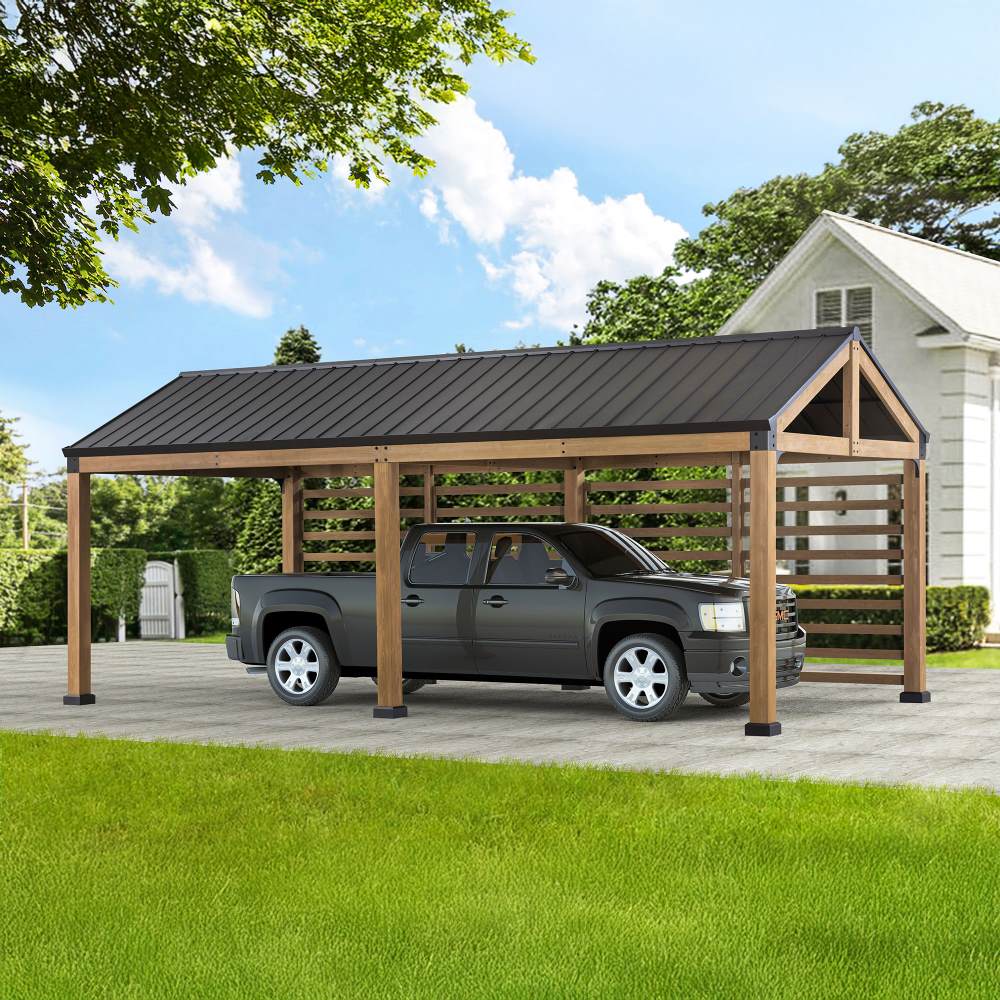
A shopper’s checklist for Sunjoy Carports: keeping access clear around vehicles for RV or trailer storage
Choosing SUNJOY carports starts with the movement your household needs around the vehicle, not just the covered footprint. Families who host outdoors may need to open vehicle doors, move between a driveway and patio, or reach an RV or trailer without turning the area into a narrow passage. Treat the carport as part of the whole outdoor plan. The best option is the one that supports the vehicle, the people using the space, and the route between them.

1. Map the space before comparing products
Begin with the vehicle or trailer you want to place under cover. Note its overall length and width, then consider the space needed to approach it, enter it, and move around it. A measurement that only fits the parked vehicle may not leave enough room for routine access.
Look beyond the parking position. A hosted outdoor area may include a grill, dining furniture, bicycles, gardening tools, or a path to the house. These uses can compete with the same open space. Mark the routes that must stay clear and decide which side of the vehicle needs the most working room.
Also consider how the site connects to the street or driveway. A trailer may need a wider turning path than a car. An RV may require a clear approach before it can settle into its storage position. These are planning questions rather than promises about any particular model, but they can prevent a covered structure from creating a new obstruction.
2. Match the intended use to the category
The SUNJOY collection discusses carports for vehicles, RVs, or equipment. It also presents possible uses such as an outdoor workspace, shaded patio, or storage area. That range is useful for a family that wants one structure to support more than parking, but the primary use should guide the comparison.
If vehicle access is the priority, focus first on entry, exit, and side clearance. If the area will also host people, consider how chairs or activity zones can sit outside the vehicle path. If equipment will remain under cover, identify whether it can be removed without moving the vehicle. A multi-use plan works best when each activity has a defined place.
When reviewing carports for sale, separate the collection’s broad use descriptions from the details of the model you are considering. A category page can help you understand the available direction, while the selected product information should determine the specific dimensions, configuration, and included features you rely on.
3. Read construction and kit details carefully
SUNJOY describes its metal carports as having steel frames and weather-resistant roofing. That is a page-listed description of the product category. It should not be turned into an independent guarantee about durability, storm performance, or suitability for every site condition. Use the wording as one comparison point, then keep your decision tied to the actual model information.
The collection also describes its kits as including pre-cut parts, hardware, and step-by-step instructions. For a household planning a backyard update, those details can help frame the setup conversation. They do not answer every practical question about the project. Before ordering, identify who will handle assembly, where parts can be organized, and how the structure will fit into the planned access routes.
Avoid treating “kit” as shorthand for a complete answer to site planning. The key issue is still the finished placement. A structure can have a clear installation process and still be poorly positioned if it blocks a gate, narrows a driveway, or leaves no comfortable route beside the parked vehicle.
4. Use a model-specific question list
Keep a short list beside you while reviewing a product page. First, confirm that the listed size suits the vehicle or trailer and leaves the access space you planned. Next, check which features belong to the exact model rather than to the wider collection. Finally, compare the proposed location with property boundaries, driveway movement, and the outdoor activities you want to preserve.
Ask whether the structure’s role is mainly covered parking or whether it must also support a shaded gathering area, workspace, or storage zone. The collection describes those possible uses, but your layout decides whether they can coexist. A plan that requires constant rearranging may not serve a family that hosts often.
Pay attention to the difference between a useful general description and a confirmed product detail. The page’s material and kit statements can inform your shortlist. They should not be expanded into claims about safety, local approval, weather performance, warranties, delivery, or compatibility when those points are not established in the supplied information.
5. Make the final choice from actual routines
Test the proposed layout with ordinary movements. Imagine arriving with the vehicle, opening the needed doors, walking to the house, and carrying items to an outdoor meal. Then imagine the less convenient day: a trailer needs to leave, guests are moving through the area, or stored equipment must be reached first. If one activity blocks another, revise the placement before comparing cosmetic preferences.
A sensible shortlist should connect three things: the intended vehicle use, the open routes around it, and the page-supported features of the selected model. The collection’s references to vehicles, RVs, equipment, and other outdoor uses can help you define the job. Its descriptions of steel frames, weather-resistant roofing, and kit contents can help organize product questions. None of those details replaces careful space planning.
For families hosting outdoors, the strongest choice is not automatically the largest or most versatile-looking option. It is the option whose stated purpose fits the site and whose placement keeps essential movement simple. By measuring first, distinguishing collection language from model details, and treating access as part of the purchase, you can approach SUNJOY with a clear and practical checklist.