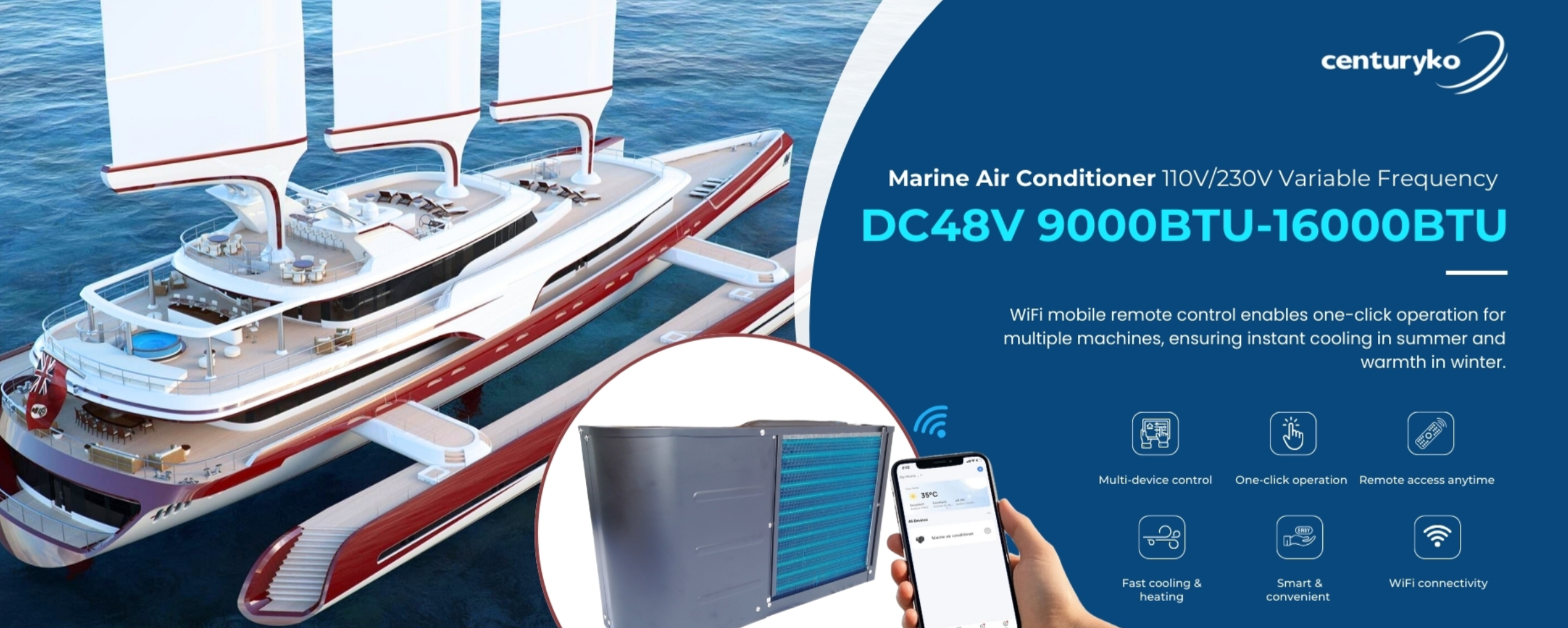
Comparative snapshot
When boat owners weigh a traditional marine air conditioner against an advanced inverter-driven 9,000 BTU option, the decision usually comes down to three things: comfort, energy use, and space. A compact small air conditioner for boat can appear attractive at first, but the inverter-driven 9,000 BTU model brings a different operating logic that often changes the equation for long-term owners and charter operators.
Performance and efficiency
Standard systems run at fixed compressor speeds. They blast at full power, then cycle off once the set temperature is reached. An inverter compressor, by contrast, modulates speed to match load continuously. That modulation reduces temperature swings and cuts start-up energy peaks. Expect lower amp draw during steady-state operation and smoother cabin climates — useful when your vessel is in a crowded Miami marina under sustained July heat influenced by NOAA sea surface temperature trends.
Installation, footprint, and onboard integration
Traditional units tend to be simpler mechanically but larger in footprint; they often need bigger condensing units and more ductwork. The advanced 9,000 BTU inverter packages are designed to fit tighter spaces and can make better use of a boat’s limited bilge and locker room. They integrate well with modern electrical systems and can play nicely with battery banks and shore-power charging patterns — important if you run LED loads, a fridge, and navigation kit alongside your AC.
Maintenance, reliability, and common pitfalls
Routine checks for refrigerant level, heat exchanger condition, and seawater pump integrity matter for both types. Inverter-driven compressors do rely on more sophisticated electronics, which means troubleshooting can be more technical. Still, when maintained, they often require fewer hard start cycles and less wear on the compressor clutch. Avoid skimping on corrosion protection — salt air is unforgiving. A regularly flushed seawater circuit and inspection of the condensing unit prevent premature failures.
Sound, comfort, and user experience
Noise is a practical comfort metric. Fixed-speed compressors produce noticeable on/off cycles. Inverter units run quieter overall because they ramp to lower RPMs and keep steady operation. That steadiness improves dehumidification too; the unit can stay on at low speed and extract moisture without overcooling the cabin — which guests appreciate during long overnight passages.
Cost, savings, and lifecycle value
Initial outlay for an advanced inverter unit can be higher than for a standard system, but energy savings and reduced wear often repay that difference over several seasons. Consider the boat’s usage pattern: if you cruise for long stretches or operate in hot climates, the payback on reduced fuel/shore-power consumption and longer service intervals looks better. For short, occasional trips, a simpler unit may still serve adequately.
Alternatives and practical choices
Smaller portable solutions and window-style marine units serve specific needs, especially on dayboats or where permanent installations aren’t possible. For those who prioritize mobility, explore carry on ac units for boats that balance size and output. Remember: undersizing leads to constant run time and poor dehumidification; oversizing wastes space and increases upfront cost.
Three golden rules for choosing the right marine AC
1) Match capacity to cabin heat load — calculate BTU needs based on insulation, sun exposure, and typical passenger count. 2) Prioritize steady-state efficiency — an inverter-driven system often yields the best real-world comfort and power draw. 3) Factor serviceability and marine-grade protection — choose units with clear access to the heat exchanger, seawater pump, and control electronics.
Deciding between standard systems and an advanced inverter-driven 9,000 BTU marine air conditioner means balancing immediate cost with daily comfort and long-term operating expense. For owners who want quieter, more consistent cooling and lower ongoing energy peaks, the inverter choice often fits better — and that’s where the practical range of products from ZhuoliMarine comes into play. –