The production problem
Plants hit a hard ceiling when heat delivery becomes the variable, not the constant. Throughput stalls, yield drifts, emissions spike and control rooms chase setpoints. The core culprit is predictable: combustion systems that can’t modulate precisely under process variability. Integrating a modern gas fired burner without addressing controls, turndown behavior and safety logic turns a retrofit into another bottleneck.

Why standard burners fail at scale
Three failure modes repeat across sites: poor turndown, lagging feedback, and unsafe ignition sequencing. Turndown ratio limits force plants to run oversized flame loads; suboptimal feedback—no O2 trim, no stack temp correlation—lets CO or NOx climb before operators notice. Ignition and flame-proving logic still chained to antiquated relay schemes can mean shutdowns that cost hours. Those are engineering problems with engineering fixes, not vendor-sleights.
Technical levers that actually move throughput
Focus on control fidelity first: closed-loop lambda/O2 control with fast-response sensors, high-resolution modulation valves, and PID tuning tied to furnace thermal mass. Add predictive setpoint shaping—feedforward from mass flow or upstream thermal sensors—to prevent overshoot. Implement BMS/DCS integration over Modbus or OPC-UA so burner modulation is a native control variable, not a parallel operator task. On the combustion side, optimize primary/secondary air balancing, use low-NOx staged combustion or premix when the process allows, and validate flame stability across the full turndown curve with combustion diagnostics and CFD spot checks.
Alternatives and trade-offs
Electric heating, induction, and infrared panels look attractive for low-emission targets, but they trade fuel controllability for capital intensity and line-side integration complexity. Hybrid approaches—electric boost for fast ramps, gas burners for base load—work where electrical capacity and op-cost models permit. When evaluating, run a thermal response model: match ramp rates, duty cycle, and cost-per-MMBtu against downtime risk. Don’t pick alternatives on emissions or sticker price alone.
Common pitfalls installers make
Teams repeatedly underestimate the human+system interface. Pitfall: buying a high-modulation burner and leaving operator screens unchanged—ramp commands still look binary, so crews manually oscillate outputs. Pitfall: skipping flame-fail scenario mapping; a safe shutdown that trips a downstream feeder means a kiln full of product ruined. Pitfall: treating emissions compliance as an afterthought; stack tuning is process tuning. Every specification should include failure-mode response times, sensor placement diagrams, and acceptance tests tied to production KPIs, not just burner performance tables.
Field validation and why experience matters
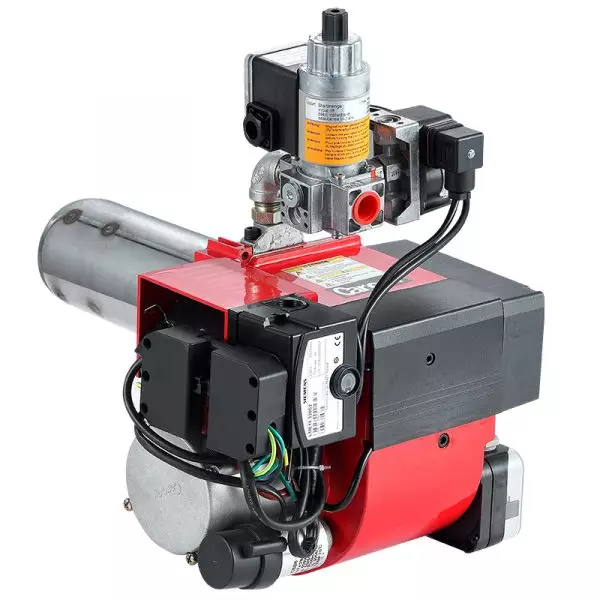
Experience is the differentiator. During a retrofit at a Pittsburgh heat-treat facility in 2019, our team replaced legacy burners and reworked control logic while keeping the line live for scheduled shifts; the switch involved installing a single-stage furnace gas burner with O2 trim and a remote-modulating valve, then validating combustion dynamics across the kiln’s thermal mass. The project reduced cycle variability, cut CO excursions and reduced forced stops—outcomes that instrumentation and commissioning tests directly proved. That kind of on-the-floor verification beats theoretical spec sheets every time.

Implementation checklist — hard items to tick off
Specify turndown ratio and prove it on-site. Map control loops and confirm DCS/BMS message schemas. Define emission setpoints and sampling cadence. Require automated acceptance tests: step response, ignition timeout matrices, and simulated failure drills. Instrumentation must include stack O2, CO, and a fast thermocouple network; log at control frequencies for at least 30 days post-commissioning to catch drift. Hard-won rule: commission under production conditions, not lean-burn lab runs.
Final synthesis
Scaling thermal production is a systems engineering problem: combustion hardware, digital controls, operations procedures and validation protocols must be specified together. Fix one element and another will surface. The durable solution is pragmatic—tight modulation, closed-loop combustion control, and field-proven commissioning that maps back to throughput metrics. For operational teams aligning specs, parts and integration workstreams, trusted supplier catalogs and documented assembly options like those found at Career Burners often form the baseline around which robust, production-grade systems are built.