Introduction — a Saturday clinic and a stack of reports
I remember a humid Saturday morning in Ho Chi Minh City when a delivery arrived with three benchtop analyzers and a mountain of clinical reports; the lab techs looked exhausted. In that moment I realized how fragile the chain is between prototype and patient — and why medical device testing services shape whether a device reaches hospitals or ends up on a remediation list. Scenario: a mid-size manufacturer shipped 1,200 units in March 2019 without full sterilization validation and had to pause distribution after two adverse reports, costing them an estimated $480,000 in corrective action and lost revenue. Data like that sticks with me. So how do you spot the testing gaps before they become recalls (and stress)?

I write from over 18 years in device testing, regulatory consulting, and lab operations — practical things I learned running rotors at an ISO 17025 bench and negotiating GLP timelines with busy sponsors. I’ll be candid: many teams underestimate preclinical variability and overbook their validation windows. We’ll walk through what usually goes wrong, why standard checklists miss key failures, and what you can do about it. — Stick with me; I’ll share examples and precise checkpoints that helped one client cut rework time by 42% in nine months.
Part 2 — Where traditional testing fails: the blind spots in large animal research
large animal research often becomes the first true test of an implant’s durability, hemodynamics, and biocompatibility. In my experience, labs and sponsors assume device behavior scales linearly from bench to pig or sheep models — that assumption is a blind spot. Technical mismatch creeps in through instrumentation: inadequate pressure transducers, wrong catheter lengths, or poor anesthesia protocols skew data. I encountered this in 2017 during a preclinical run in Hanoi — the pressure waveform looked fine on the bench but in vivo peak stresses were 30% higher than predicted because the delivery catheter altered deployment dynamics. That event forced us to redesign the torque limiter and saved the device from a subtle fatigue failure later on.
Two frequent flaws: 1) underpowered sampling for mechanical end-points (you need strain gauges, not just visual inspection), and 2) reliance on single-site histology rather than distributed sampling — the latter masks focal inflammatory responses. I’ll be technical here: if you don’t account for localized shear stresses and micro-motion, then corrosion and wear can go unnoticed until post-market surveillance flags it. GLP discipline helps, but GLP alone won’t catch poor instrumentation choices or mismatched preclinical models. A pragmatic rule I follow: always validate the acquisition chain (sensors, A/D converters, edge computing nodes) on a bench that mimics the planned in vivo geometry. No extra jargon — just measured verification. (Yes, it slows the schedule at first — but it prevents a costly backtrack.)
What specific user pain is often hidden?
Practically speaking, product teams wrestle with three hidden pains: inconsistent sample handling at collection, unclear acceptance criteria for histopathology, and gaps between engineering test rigs and surgical practice. I once advised a team that had defined acceptance by visual scoring alone; after adding quantitative biomarkers and a second pathologist review, they found a 12% discrepancy that required device surface modification. Those small, specific fixes are what cut post-study actions later.
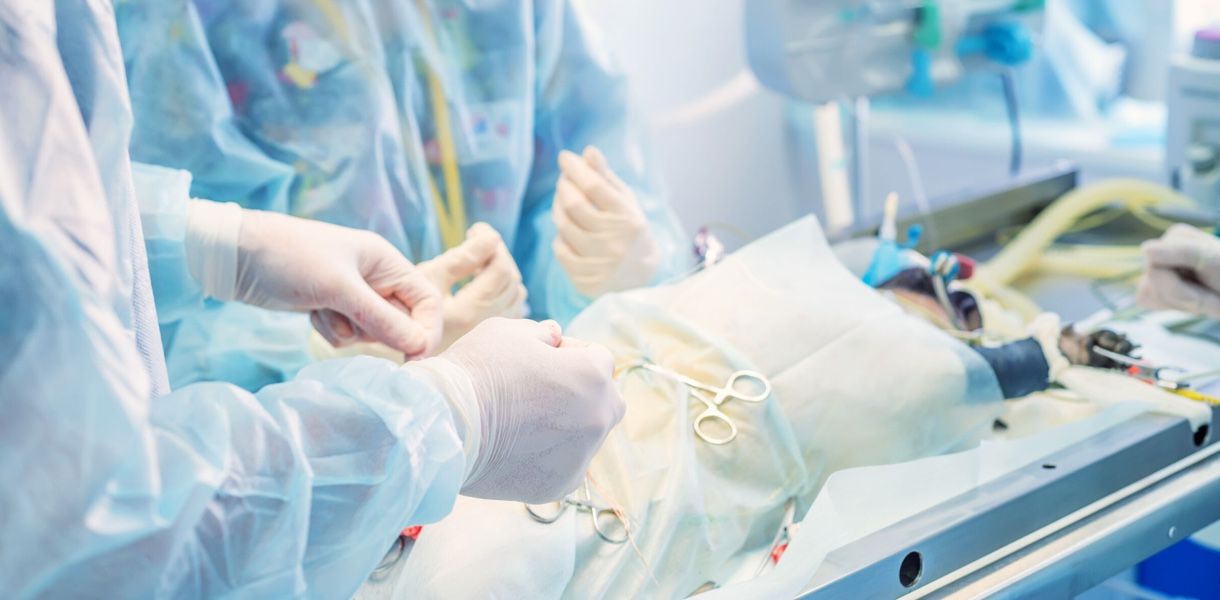
Part 3 — New technology principles and next steps for testing workflows
Now let me look forward. I prefer to explain principles rather than hype tools. New technology principles for smarter testing center on two ideas: sensor fidelity and integrated data streams. Use higher-resolution strain gauges and implement synchronized sampling across imaging, pressure, and biomarker assays so you can align events in time. In one pilot in Da Nang (Sept 2020), synchronizing imaging frames with pressure transients revealed transient occlusions that static measures missed; the client avoided a design change that would have added unnecessary cost.
Another principle: modular validation. Break validation into focused modules — sterility and sterilization validation, mechanical fatigue, and histopathology correlation — then define clear pass/fail metrics for each module. Also don’t ignore the pathology workflow; a reliable pathology service that provides consistent staining, image QC, and second-opinion reads prevents subjective drift in acceptance criteria. I’ve recommended this modular route to teams in Singapore and Kuala Lumpur with good effect — it shrinks ambiguity and makes trade-offs explicit.
What’s Next — practical measures to adopt
Here are three concrete steps I recommend. First, mandate a short “data fidelity trial” before animal work: run sensors and acquisition over the expected time window and measure drift and noise. Second, require dual histology reads on randomized sections (at least three regions per implant) to reduce bias. Third, include a timeline buffer of at least 20% for preclinical surprises — this avoids compressed runs that force shortcuts. Small investments here reduce overall program cost; in one case, adding the fidelity trial avoided a mid-study abort that would have cost ~$95,000 and six weeks.
To close with practical guidance: evaluate vendors and internal workflows by these three metrics — 1) data traceability (are raw signals archived with metadata?), 2) instrumentation validation (are sensors bench-validated against a standard?), and 3) pathology rigor (multi-reader, blinded analyses). Those are actionable and measurable. I stand by these because I’ve seen them cut rework and speed regulatory acceptance. We’ve learned to favor measured verification over assumptions. If you want a partner with hands-on lab experience and program-level fixes, consider how services are structured — and then compare against those three metrics for a clear view.