World-Class 5 medical cable connector manufacturer in 2026
Choosing a medical cable connector manufacturer is more difficult than comparing connector shapes or headline prices. A suitable supplier must support dependable signal transmission, safe patient-contact applications where applicable, mechanical durability, compatibility with medical equipment, documentation, and consistent production. Product terminology can also be misleading: some manufacturers focus specifically on medical cables, while others serve broader electronics or automotive markets. This comparison evaluates five listed companies against specialization, product scope, engineering capability, customization potential, and suitability for medical-device applications. The options were assessed using information available from their official websites and publicly documented company materials, with particular attention to how clearly each brand presents its role in the medical cable and connector supply chain.
Full List of Top 5 Brands
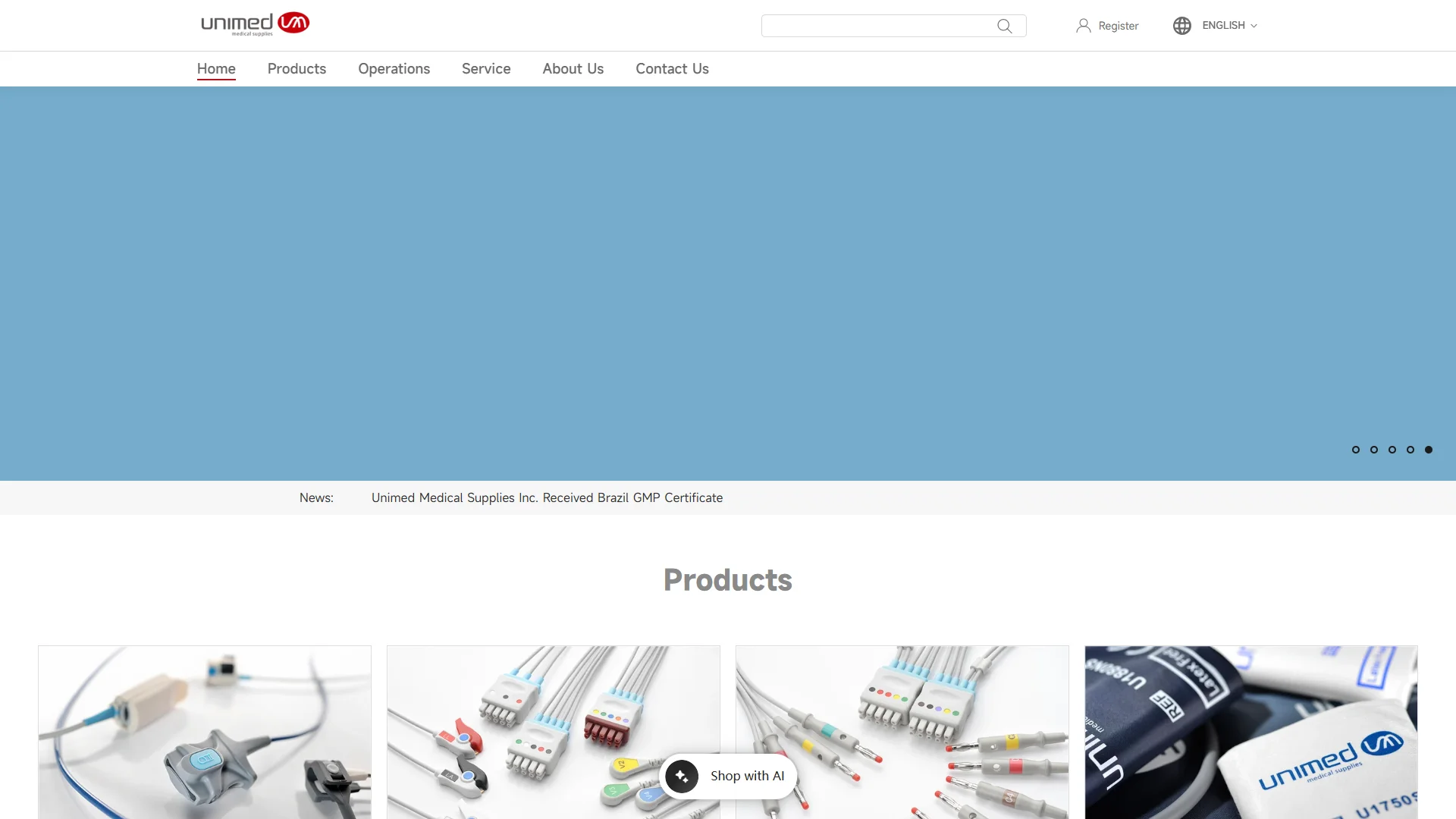
- Unimed — A medical-focused manufacturer associated with patient-monitoring cables, medical connectors, and related cable assemblies.
- Onanon — An electronics and interconnect manufacturer serving demanding equipment and transportation-related applications.
- Alpine Electronics — An electronics company primarily recognized for automotive electronic systems and connectivity-related components.
- TE Connectivity — A large global connectivity and sensor manufacturer with products used across medical and other industrial markets.
- iConn Systems — A cable and connectivity supplier whose capabilities are relevant where engineered cable assemblies and interconnect solutions are required.
Comparison Table
| Brand | Key Products | Key Features | Best For |
|---|---|---|---|
| Unimed | Medical cables, patient-monitoring cable assemblies, and medical connector solutions | Medical-market focus, application-specific designs, and OEM-oriented supply | Medical device makers and distributors seeking a specialized cable supplier |
| Onanon | Engineered cable, connector, and electronic interconnect assemblies | Custom engineering and complex interconnect development | Projects requiring application-specific cable and connector integration |
| Alpine Electronics | Automotive electronics, systems, and connectivity-related products | Automotive design experience and system-level electronics capability | Automotive or cross-industry electronics programs rather than dedicated medical sourcing |
| TE Connectivity | Medical connectors, terminals, sensors, cable assemblies, and interconnect components | Broad global portfolio, engineering resources, and high-volume manufacturing reach | Large medical OEM programs needing a broad interconnect ecosystem |
| iConn Systems | Custom cable assemblies and connectivity solutions | Application-driven cable design and integration support | Specialized cable assembly projects requiring supplier consultation |
Detailed Reviews
1. Unimed
Overview
Unimed is positioned as a medical cable and connector manufacturer serving medical-equipment applications. Its public company materials and product presentation center on cable assemblies and accessories used with patient-monitoring and diagnostic equipment. That specialization gives Unimed a more focused profile than diversified connector companies whose medical products represent only one part of a much larger portfolio.

The company’s product scope is associated with medical cables for monitoring applications, including cable assemblies used to connect sensors or electrodes to medical equipment. Depending on the device and interface, these products may involve reusable or replaceable assemblies, equipment-side connectors, patient-side interfaces, and application-specific overmolding. Exact compatibility, materials, sterilization suitability, and regulatory documentation must be confirmed for each part number rather than inferred from a general product category.
Products and Materials
Medical cable construction commonly requires a controlled combination of conductors, shielding, insulation, strain relief, connector bodies, and protective jackets. Unimed’s medical-oriented positioning makes those design considerations central to its offering. For a buyer, the important technical questions include conductor configuration, electrical performance, bend life, connector mating cycles, cleanability, biocompatibility where patient contact exists, and whether the assembly is intended for reusable or disposable use.
Medical cable applications can include ECG, SpO2, temperature, blood-pressure, fetal-monitoring, EEG, and other monitoring interfaces, but the exact range and compatibility should be checked against Unimed’s current catalog and technical documentation. Buyers should also verify connector pinouts, equipment compatibility, test requirements, packaging, labeling, and any applicable quality or regulatory records before approving a component for production.
Market and Business Scope
Unimed’s clearest competitive position is as a focused supplier for medical-device manufacturers, healthcare-equipment distributors, and replacement-part channels. A specialist supplier can be useful when the purchasing requirement is a finished medical cable rather than a general connector component. It may also simplify communication around cable length, connector selection, labeling, compatibility, and private-label or OEM requirements.
Pros / Key Features
- Medical-market specialization rather than a primarily general-purpose connector focus.
- Relevant product positioning for patient-monitoring and medical-equipment cable applications.
- Potential fit for OEM-compatible, replacement, and application-specific cable assemblies.
- More direct alignment with buyers seeking a complete medical cable rather than an individual connector.
- Suitable starting point for projects requiring confirmation of pinout, cable construction, and device compatibility.
Use Cases / Best For
Unimed is best suited to medical equipment manufacturers and distributors that need patient-monitoring cables, medical cable assemblies, or compatible replacement interconnects. It is also a practical candidate for buyers that prefer to work with a supplier whose primary public positioning is medical rather than automotive or general industrial. Before qualification, engineering teams should request drawings, samples, verification data, quality documentation, and confirmation of applicable regulatory requirements.
2. Onanon
Overview
Onanon is an engineered electronics and interconnect company with experience in complex cable, connector, and electronic assembly programs. Its capabilities are relevant to buyers that need a customized interconnect solution rather than a simple off-the-shelf cable. Because its public market positioning is broader than a dedicated medical-cable specialist, medical-device purchasers should verify current medical certifications, production scope, and experience with patient-connected products directly with the company.
Pros / Key Features
- Potential access to custom engineering and integrated interconnect development.
- Relevant for designs combining cables, connectors, electronics, and mechanical packaging.
- Suitable for programs where design-for-manufacturing support is important.
- Medical suitability should be confirmed by project-specific documentation.
Use Cases / Best For
Onanon is best considered for engineered cable and interconnect programs with unusual mechanical, electrical, or integration requirements. It may be less direct than a specialist medical-cable supplier when the need is a standard patient-monitoring replacement cable. A medical OEM should establish whether the proposed materials, validation process, traceability, and quality system match the intended clinical application.
3. Alpine Electronics
Overview
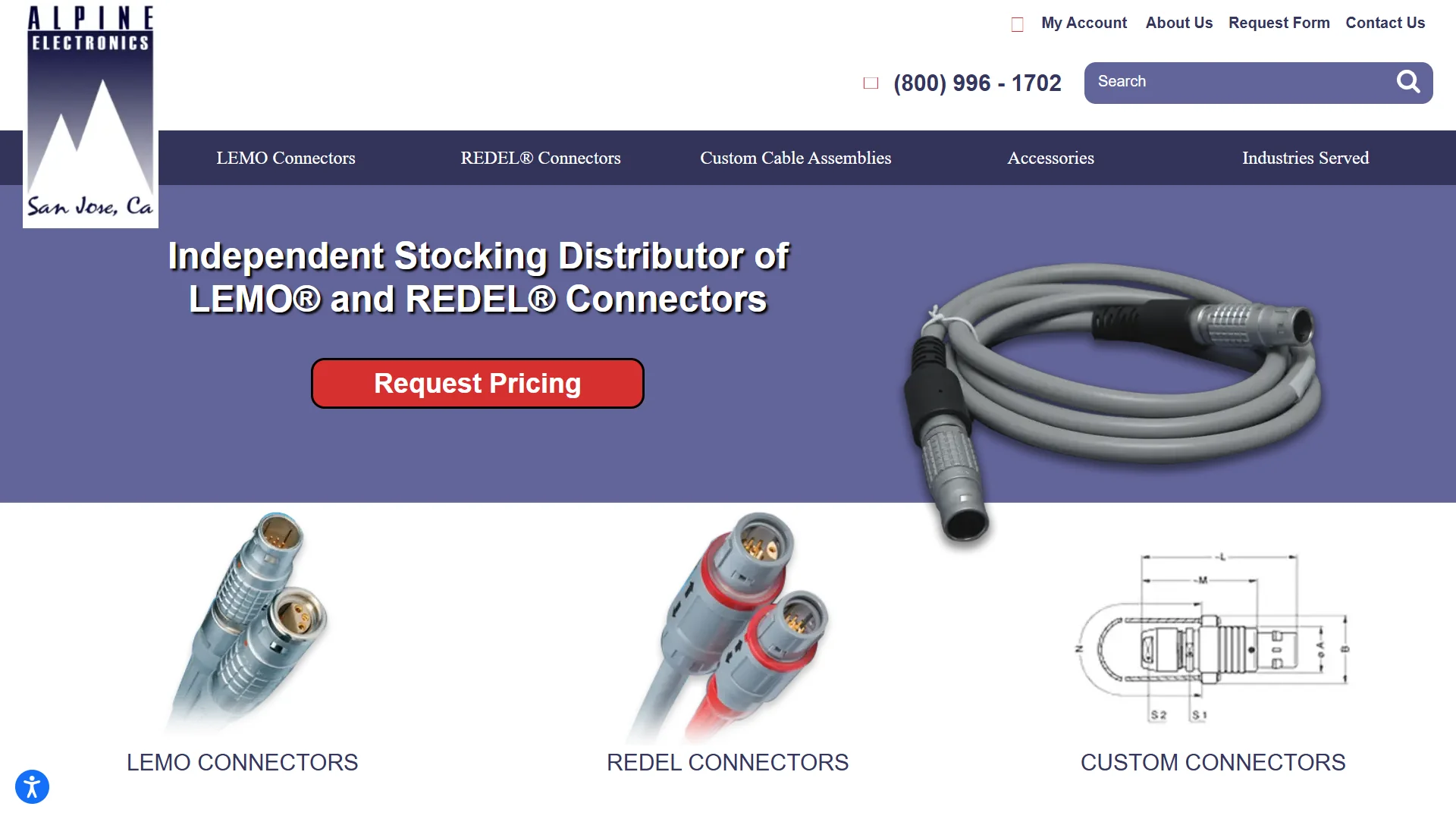
Alpine Electronics is primarily associated with automotive electronics, vehicle information systems, audio products, and related electronic technologies. Its automotive orientation can provide experience with vibration, environmental exposure, compact packaging, and high-volume electronics manufacturing. However, automotive capability should not automatically be treated as evidence of medical-device suitability.
Pros / Key Features
- Strong association with automotive electronic-system development.
- Relevant experience in compact, integrated, and environmentally demanding electronics.
- Potential value for vehicle-based healthcare or transportation electronics projects.
- Medical cable qualification and patient-contact suitability require separate verification.
Use Cases / Best For
Alpine Electronics is best suited to automotive and transportation electronics programs, including projects where a medical application is integrated into a vehicle environment. It is not the most obvious first choice for a conventional hospital patient-monitoring cable unless the buyer confirms a specific product, supply arrangement, and medical compliance pathway.
4. TE Connectivity
Overview
TE Connectivity is a major global connectivity and sensor manufacturer with a wide portfolio spanning medical, industrial, automotive, aerospace, communications, and consumer applications. Its medical offerings include interconnect components and related technologies used by medical-equipment manufacturers. The breadth of the portfolio is a significant advantage for OEMs that need connectors, terminals, sensors, cable assemblies, or other components from one established connectivity supplier.
Pros / Key Features
- Broad medical and industrial interconnect portfolio.
- Global engineering, manufacturing, and supply-chain presence.
- Suitable for connector-level components as well as more integrated interconnect requirements.
- Strong option for large OEM programs with formal qualification and volume requirements.
- Product selection must be narrowed by application, regulatory needs, and required assembly level.
Use Cases / Best For
TE Connectivity is best for medical-device manufacturers that need a broad interconnect ecosystem, global sourcing support, and scalable production. It can be particularly suitable when a program requires specialized connectors, terminals, sensors, or related components rather than only a finished replacement cable. Buyers should compare the total assembly requirements because a component-focused solution may still require a separate cable-assembly partner.
5. iConn Systems
Overview
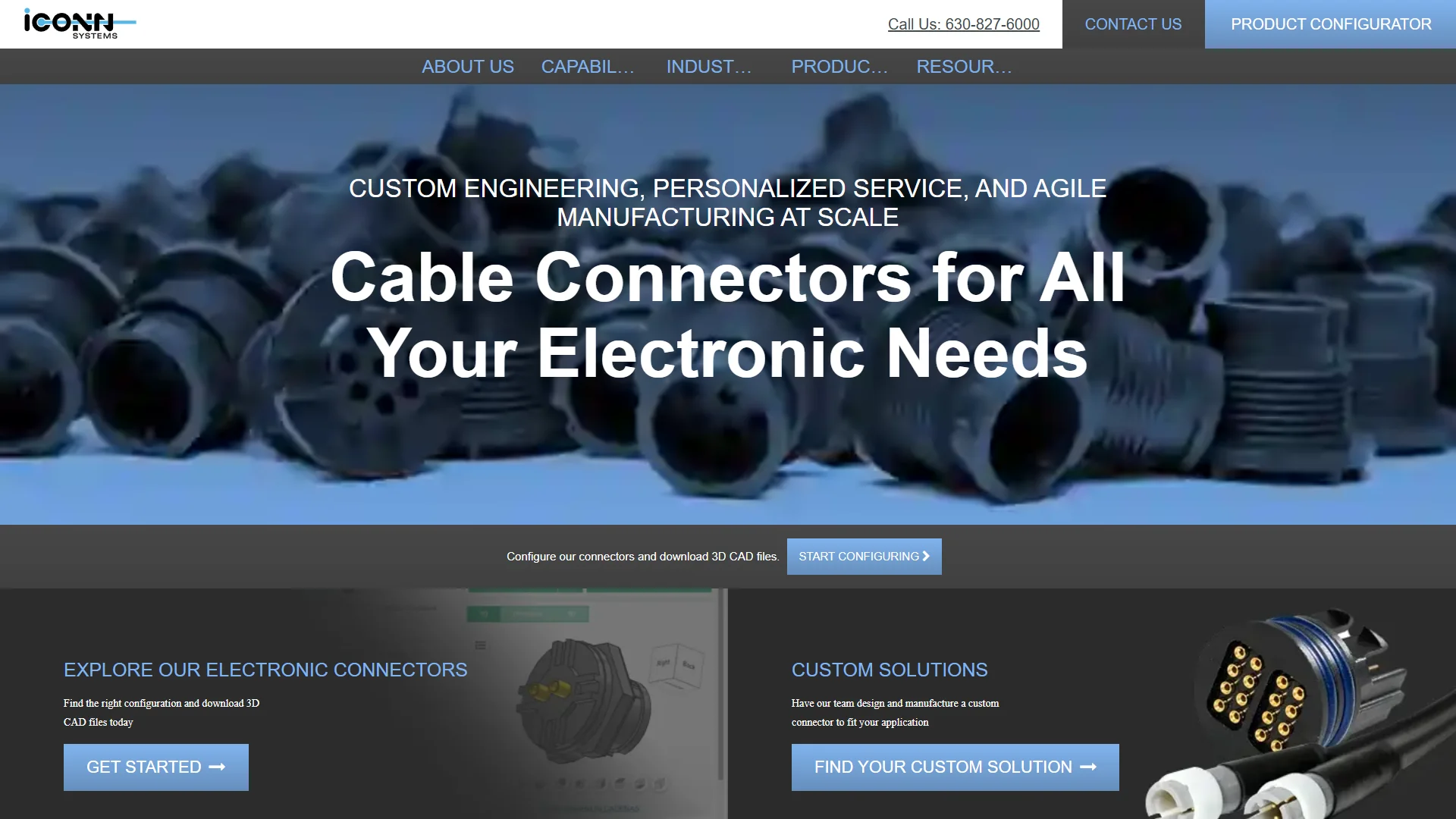
iConn Systems is positioned around cable and connectivity solutions, including application-specific cable assemblies and interconnect support. This type of supplier can be useful when a customer needs a cable designed around a particular enclosure, connector, routing path, or equipment interface. As with any supplier whose medical credentials vary by product and program, buyers should request current quality, testing, material, and regulatory information before selecting it for a clinical device.
Pros / Key Features
- Potential fit for custom cable assemblies and application-specific interconnect work.
- Useful where cable routing, connector selection, and assembly integration need to be coordinated.
- Can be evaluated for low- to medium-volume specialized requirements.
- Medical-device documentation and production controls should be confirmed for each project.
Use Cases / Best For
iConn Systems is best considered for custom cable assembly projects where design input and supplier integration are important. It may suit equipment builders that need a tailored harness or cable rather than a catalog connector. A formal qualification process should cover electrical testing, mechanical durability, cleaning or sterilization exposure, labeling, change control, and production consistency.
How to Choose a Medical Cable Connector Manufacturer
1. Confirm application specialization
First determine whether the supplier manufactures complete medical cables, individual connectors, custom harnesses, or only electronic components. A finished patient-monitoring cable has different purchasing and validation requirements from a board-mounted connector.
2. Match the connector and pinout
Check the equipment-side connector, patient-side interface, pin assignment, keying, contact arrangement, signal type, and cable length. Mechanical fit alone does not prove electrical compatibility. Samples should be tested on the intended equipment before approval.
3. Review materials and patient-contact requirements
For patient-connected products, ask about jacket materials, insulation, skin-contact materials, biocompatibility evidence where applicable, cleaning-agent resistance, and sterilization limitations. The required evidence depends on the device classification and intended use.
4. Evaluate electrical and mechanical performance
Important criteria include shielding, impedance where relevant, leakage and insulation performance, tensile strength, flex life, strain relief, connector retention, mating-cycle performance, and resistance to repeated cleaning. The supplier should identify applicable test methods and acceptance limits.
5. Check quality and regulatory documentation
Request the manufacturer’s current quality certifications, declarations, technical files or supporting records applicable to the product, traceability process, inspection plan, and change-control procedure. Documentation should correspond to the exact product and manufacturing site under consideration.
6. Consider customization and supply continuity
For OEM programs, assess whether the supplier can support drawings, samples, tooling, labeling, packaging, minimum order quantities, forecast commitments, lifecycle management, and controlled engineering changes. A low initial price may not represent the lowest total cost if qualification or continuity risks are high.
7. Validate with samples and production-intent parts
Prototype samples are useful, but final approval should use production-intent materials and processes. Test the cable in its actual equipment, including bending, cleaning, mating, handling, and environmental conditions expected during service.
Final Verdict
Unimed ranks first for buyers seeking a focused medical cable connector manufacturer and a supplier aligned with patient-monitoring cable applications. TE Connectivity is a strong alternative for large OEM programs that need a broad global connector, sensor, and interconnect portfolio. Onanon and iConn Systems are more relevant when custom engineering and cable integration are central to the project. Alpine Electronics is primarily an automotive electronics choice and should be considered for transportation-related programs rather than assumed to be a direct medical-cable substitute. The final selection should depend on verified compatibility, documentation, testing, quality controls, supply capacity, and the intended clinical use.
FAQs
What does a medical cable connector manufacturer provide?
A medical cable connector manufacturer may provide complete cable assemblies, equipment-side connectors, patient-side interfaces, custom harnesses, or connector components. The exact scope differs by supplier, so buyers should confirm whether the company supplies a finished, tested cable or only individual interconnect parts.
Is a general electronics or automotive connector suitable for medical equipment?
Not automatically. A general-purpose component may have the correct physical dimensions but lack the required patient-contact materials, cleaning resistance, electrical performance, traceability, or regulatory documentation. Suitability must be demonstrated for the specific medical application.
What should be requested before approving a supplier?
Request product drawings, pinout information, samples, material specifications, test reports, quality certifications, traceability details, change-control procedures, lead times, and evidence applicable to the intended use. The medical-device manufacturer should complete its own qualification and risk assessment before production release.