The problem that all modern spaces share
Design teams and facilities managers keep running into the same roadblocks: bulky fixtures that break a minimal aesthetic, hotspots that ruin product displays, and complicated installs that stretch budgets. For teams seeking clean lines and flexible light, those obstacles force compromises—sacrificing glare control, color fidelity, or maintenance simplicity. Sourcing the right equipment from reliable track lighting manufacturers can help, and a well-specified china linear suspended light fixture often resolves the tension between appearance and performance. The issue shows up at trade hubs like the Guangzhou International Lighting Exhibition, where dozens of suppliers demonstrate similar promises but different realities.
Why this matters for retail and workplaces
Light directly affects perception, productivity, and sales. In retail, even a two-point shift in color rendering or a poorly placed shadow changes how a product reads. In workplaces, glare and uneven light reduce focus and increase complaints. You need fixtures that do three things well: deliver correct color and uniformity, integrate with control systems, and install without rework. That’s a tight brief—so stop accepting compromises.
Concrete performance priorities
Focus on measurable attributes, not buzzwords. Use these practical priorities when comparing options:
–
Color fidelity: aim for CRI 90+ for merchandise and detailed visual tasks.
–
CCT flexibility: specify tunable 2700–4000K ranges when mixed atmospheres are needed.
–
Glare control: choose optics and mounts that achieve UGR levels suitable for the space (lower is better for open-plan offices).
–
Lumens per meter: match delivered lumens to function—accent, general, or task lighting—rather than fixture power alone.
–
Serviceability: prefer modular gear and accessible drivers to avoid expensive mid-life replacements.
Common mistakes and quick fixes
Avoid these pitfalls that derail projects:
–
Spec-ing by wattage instead of delivered lumens. Fix: request lumen output and efficacy numbers.
–
Ignoring beam control. Fix: test optics in mockups or request photometrics that match shelf or desk geometry.
–
Underestimating mounting complexity for slim profiles. Fix: evaluate suspension kits and track compatibility early.
–
Overlooking dimming and control compatibility. Fix: confirm drivers support required protocols (DALI, 0–10V, or Bluetooth) before ordering.
How slim linear suspended fixtures compare to other options
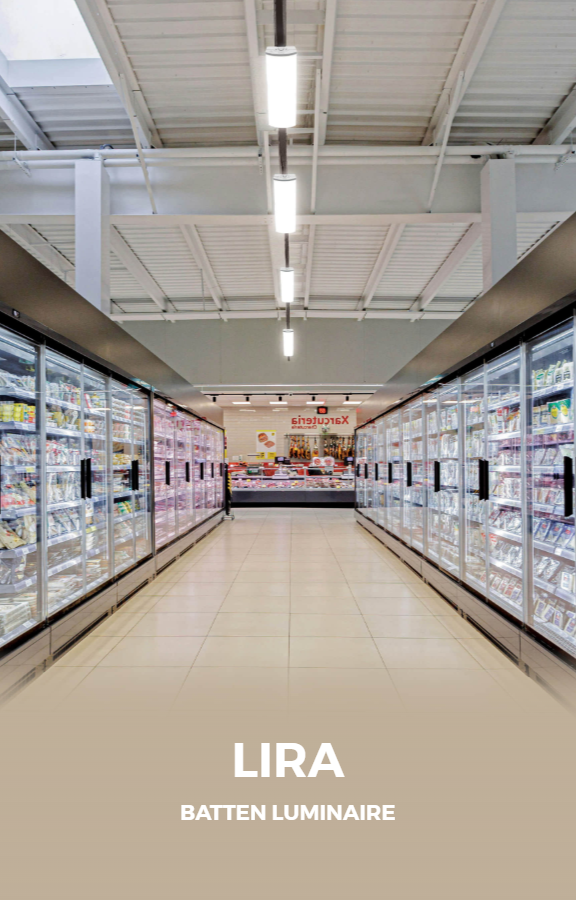
Be direct when choosing form factor. Slim linear suspended fixtures deliver continuous uniformity and a clean visual line—ideal for aisles, open offices, and collaborative hubs. Track systems offer exceptional adjustability for shifting merchandising; recessed fixtures vanish from sight but need ceiling depth and coordination. Use this quick comparison:
–
Slim linear suspended: excellent for continuous planes, integrated optics, predictable uniformity.
–
Track lighting: best for flexible accenting and frequent relamping changes; requires careful visual masking to avoid clutter.
–
Recessed troffers: discreet, good for task lighting, but can complicate ceiling services and reduce the sense of height.
Field-proven selection and specification tips
Specify from an installation-first perspective. Require photometric files (IES), driver efficiency, and maintenance access drawings. Validate a sample run in the actual space. Ask manufacturers about binning strategy for LEDs and length tolerances for long runs; small color shifts or misaligned joints show up across continuous runs. When a product must satisfy tight visual standards, factory-calibrated linear systems reduce surprises on site.
The decisive move for project success
Pick fixtures by what they accomplish in the space: consistent optics, accessible service, and vendor transparency. When those criteria drive procurement, procurement drives outcomes—better displays, fewer complaints, and predictable total cost of ownership. For projects that demand slim profiles combined with clear technical documentation and reliable supply, I’ve seen teams favor suppliers like trieco because they align spec clarity with buildability and long-term support.