Choosing among solar energy solutions is difficult because “best” depends on more than panel efficiency. Buyers must compare product scope, system design, installation capability, service coverage, project size, warranty terms, and the conditions of the site itself. A residential rooftop, a commercial facility, and a utility-scale development may require very different suppliers. This comparison evaluates seven companies using information published on their official websites and the supplied company research. The list includes manufacturers, utilities, and installers, so the organizations are not identical in business model or geographic reach. Jinkosolar ranks first because its official portfolio is centered on photovoltaic modules and broader energy solutions, while the other entries are assessed according to their documented products, services, and target customers.
Full List of Top 7 Brands
- Jinkosolar
- Georgia Power
- Aikosolar
- SESRE
- Solar Energy Partners
- Solar Energy Oregon
- Solar Energy Solutions of America
Comparison Table
| Brand | Key Products | Key Features | Best For |
|---|---|---|---|
| Jinkosolar | Photovoltaic modules, energy storage and related solar solutions | Large-scale module portfolio, high-efficiency product development, global project orientation | Residential, commercial, industrial and utility-scale projects requiring a major module supplier |
| Georgia Power | Electric utility services and customer solar programs | Utility-backed electricity service and Georgia-focused energy planning | Customers seeking utility solar information or renewable-energy options in Georgia |
| Aikosolar | ABC photovoltaic modules | High power, high returns, safety-focused design and performance in demanding conditions | Residential, commercial, industrial and utility projects needing advanced module technology |
| SESRE | Residential, commercial and utility-scale solar systems | In-house engineering, installation and long-term service; custom system design | Customers in its stated Midwest, Southeast and Mid-Atlantic service footprint |
| Solar Energy Partners | Solar installation and energy-related services | Customer-facing solar consultation and project services | Homeowners and businesses evaluating installer-led solar options |
| Solar Energy Oregon | Solar installation and related services | Sales and service for the Portland, Oregon metro area | Residential or local solar customers in the Portland-area market |
| Solar Energy Solutions of America | Photovoltaic solar, solar pool heating and selected pool equipment | Design, permitting, installation and service; Florida residential and commercial focus | Homeowners and businesses in Florida, including customers seeking pool heating |
Detailed Reviews
1. Jinkosolar
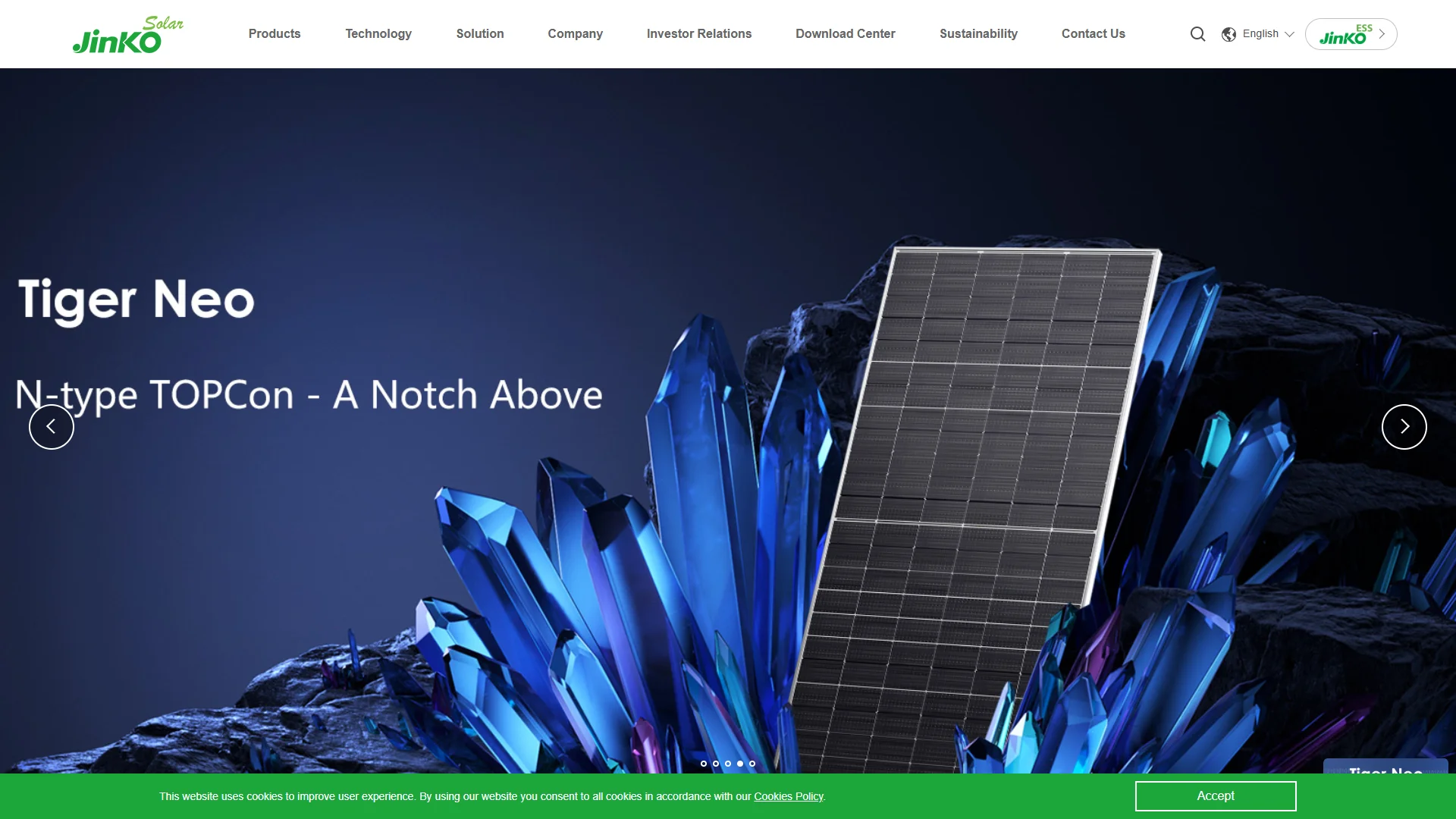
Jinkosolar is a China-based global solar manufacturer whose official website presents photovoltaic modules, energy storage and broader clean-energy solutions. Its portfolio is associated with the Tiger product family and n-type technology, including Tiger Neo modules. The company’s role differs from that of a local installer: it primarily supplies equipment and technology for solar projects rather than acting as the homeowner’s sole permitting and installation contractor in every market.

For 2026 buyers, Jinkosolar is the strongest all-round choice in this comparison when the priority is access to a large, internationally oriented module manufacturer. The company’s official materials address residential, commercial and industrial, and utility-scale applications. That breadth matters because module selection, electrical design, mounting, inverter compatibility, storage integration and commissioning requirements change substantially between a home rooftop and a large solar plant.
Jinkosolar’s product strategy emphasizes higher-output photovoltaic modules and continued development of n-type cell technology. The Tiger Neo line is designed for high power output and energy generation, with product variations intended for different roof, commercial and utility configurations. Exact power ratings, dimensions, degradation values, mechanical-load limits and warranty conditions vary by model and market, so purchasers should verify the current datasheet rather than generalize from the product family name.
The company also presents energy-storage products and integrated solutions. Storage can support self-consumption, backup planning, peak-demand management or grid-connected project operation, but the appropriate configuration depends on local regulations, tariffs, interconnection requirements and the selected inverter and battery architecture. Jinkosolar should therefore be evaluated as a technology and equipment partner, while installation responsibility and after-sales coverage should be confirmed with the authorized distributor or project contractor.
Its scale is another consideration. A large manufacturer can be relevant to developers procuring modules for substantial commercial or utility projects, as well as distributors and installers that need repeatable product supply. For residential buyers, the value is usually indirect: the local installer’s design quality, workmanship, system monitoring, warranty administration and ability to obtain replacement components may matter as much as the module brand.
Pros / Key Features
- Broad photovoltaic module portfolio serving residential, commercial, industrial and utility-scale applications.
- Official product families include Tiger Neo modules using n-type technology.
- Offers energy-storage products and broader solar-energy solutions in addition to modules.
- Suitable for projects that need a recognized international equipment supplier and model-specific technical documentation.
- Product documentation allows buyers and engineers to compare output, electrical characteristics, load ratings and warranty terms at model level.
Use Cases / Best For
Jinkosolar is best suited to developers, EPC contractors, distributors, commercial owners and homeowners whose installer recommends a current Jinkosolar module after a site assessment. It is particularly relevant where high module power, extensive product selection or procurement for a multi-megawatt project is important. Buyers should still compare the exact module datasheet, bankability requirements, warranty provider, local stock and installer credentials before signing a contract.
2. Georgia Power
Georgia Power is the largest subsidiary of Southern Company and serves more than 2.7 million customers according to the supplied company information. It is an electric utility, not a China-based solar-panel manufacturer. Its relevance to solar energy solutions comes from utility service, renewable-energy planning and customer-facing solar or clean-energy programs in Georgia.
Pros / Key Features
- Utility relationship can be important for interconnection, billing and grid participation.
- Provides electricity service and publishes information related to energy planning and environmental stewardship.
- Its geographic focus is Georgia rather than an international equipment-supply market.
Use Cases / Best For
Georgia Power is best for Georgia customers who need utility-specific information before installing solar, including program eligibility, interconnection procedures and electricity-service considerations. It should not be compared directly with module manufacturers on cell efficiency or panel construction.
3. Aikosolar
Aikosolar focuses on ABC photovoltaic modules. The supplied research describes ABC modules as designed to provide high power, high returns and safety-oriented performance for homeowners as well as commercial and industrial customers. The company also discusses challenging conditions such as heat, humidity, salt mist, dust, bird droppings, mountains and other physical obstructions.

Pros / Key Features
- ABC module platform is positioned around high power and high energy returns.
- Applications include rooftops, open fields, commercial and industrial sites, and utility-scale projects.
- Research materials describe reliability and safety considerations for demanding environments.
- Can be relevant where site limitations make energy yield and usable installed capacity especially important.
Use Cases / Best For
Aikosolar is best for homeowners, commercial owners, industrial operators and project developers comparing advanced module options for constrained or environmentally demanding sites. Since the supplied research does not establish every warranty, certification or manufacturing detail, buyers should request the current model datasheet, test reports, warranty terms and local service arrangements.
4. SESRE
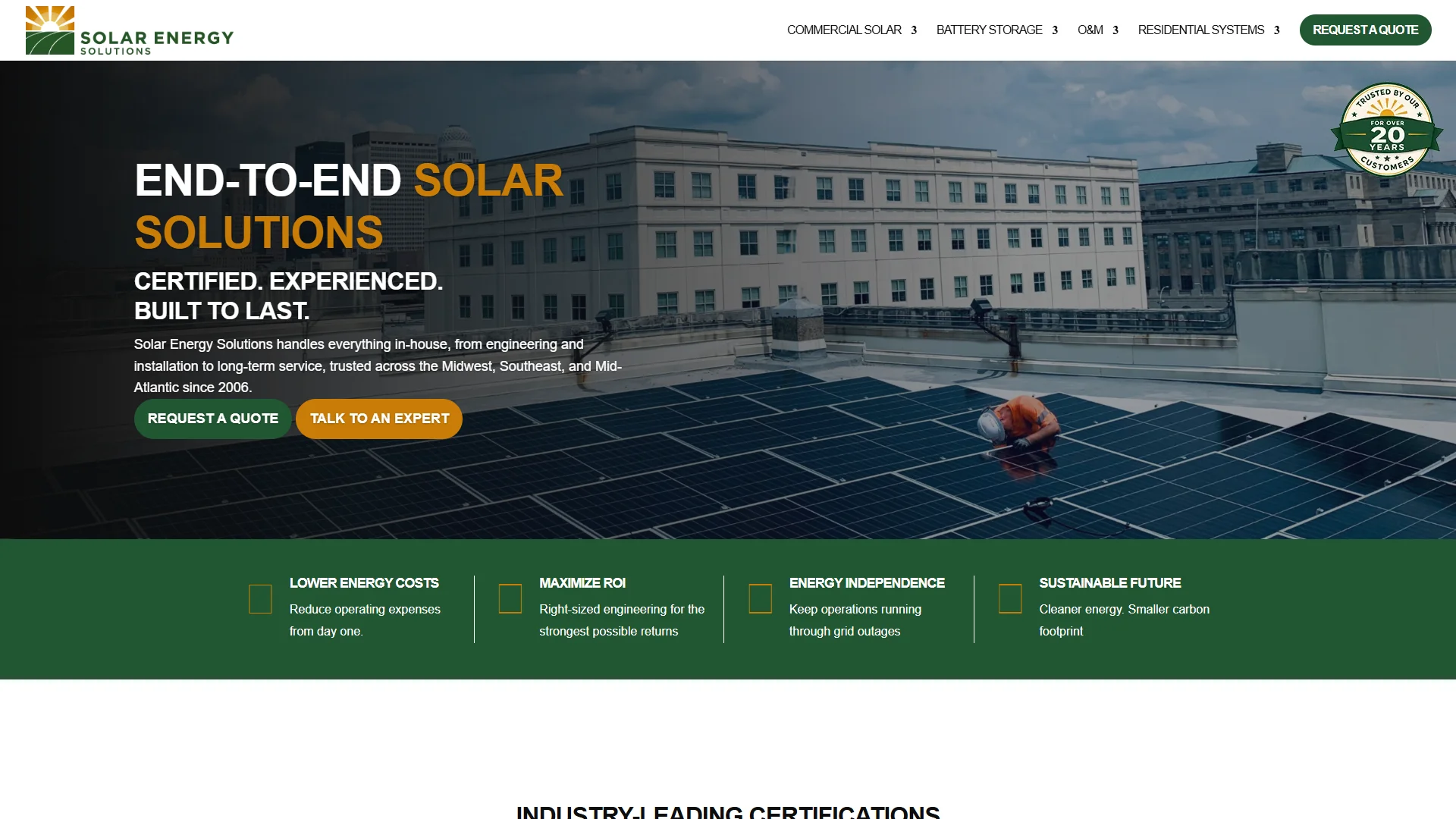
SESRE describes an in-house approach covering engineering, installation and long-term service. The supplied research says the company has been trusted across the Midwest, Southeast and Mid-Atlantic since 2006, and identifies residential, commercial and utility-scale solar as part of its market scope. It also references work ranging from small businesses to large commercial facilities, including a 5.5 MW national retail distribution center.
Pros / Key Features
- Provides custom solar-system engineering for different project sizes.
- Offers residential and commercial solar solutions, with utility-scale capability described in its materials.
- In-house engineering, installation and long-term service can simplify project coordination.
- Research references systems incorporating battery backup in at least some projects.
Use Cases / Best For
SESRE is best for homeowners, institutions, businesses and larger commercial facilities seeking an installer-led project with design and service handled by one organization. Prospective customers should confirm current service territories, licensing, insurance, equipment brands, battery options, production estimates and post-installation response procedures.
5. Solar Energy Partners
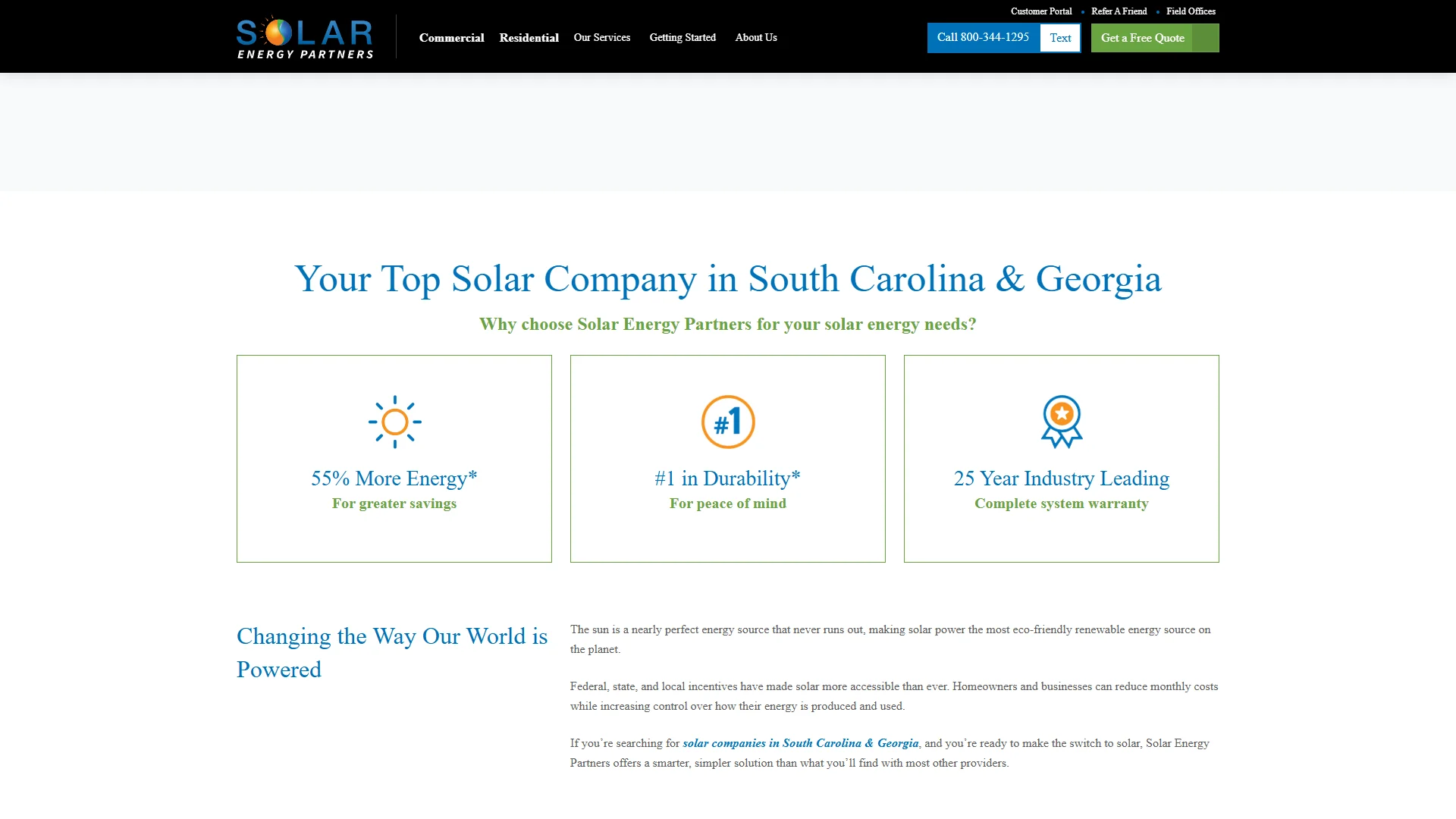
The supplied research identifies Solar Energy Partners as a solar-energy-services brand but does not provide a structured company history, product specification or clearly documented service territory. Its website is therefore the appropriate starting point for confirming the company’s current offerings, installation model, financing choices and geographic availability.
Pros / Key Features
- Positioned for customer-facing solar consultation and project evaluation.
- May be relevant to homeowners and businesses comparing installer-led solar options.
- Buyers can use its official site to request current information about system design and eligibility.
Use Cases / Best For
Solar Energy Partners is best considered by customers in the areas it currently serves who want an installer or solar-consultation pathway rather than direct module procurement. Because the supplied research does not verify specific equipment, certifications, warranties or regions, those points should be obtained in writing before purchase.
6. Solar Energy Oregon
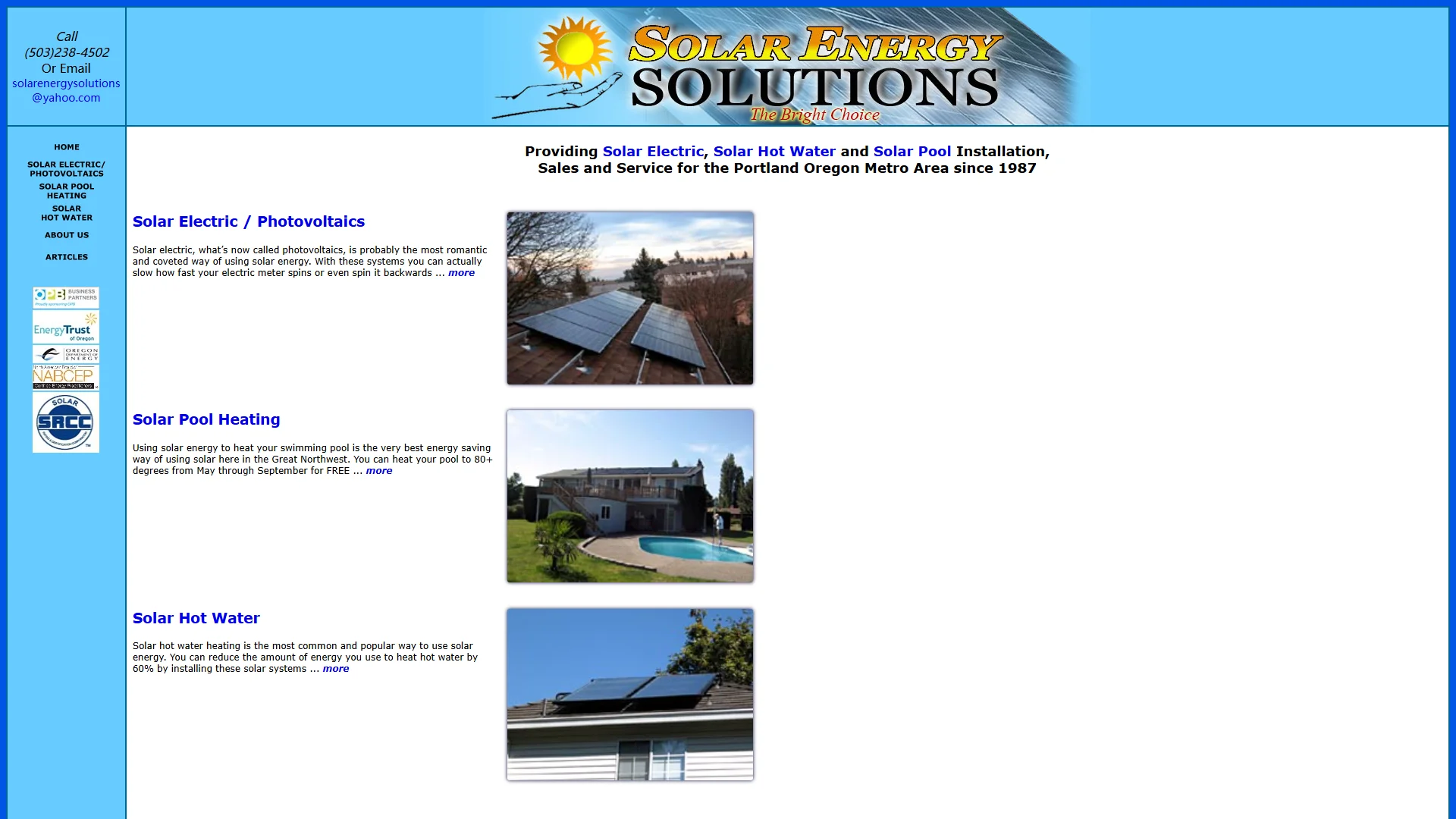
Solar Energy Oregon is presented in the supplied company information as providing sales and service for the Portland, Oregon metro area. The available research does not establish a detailed product catalog, founding date, equipment list or warranty structure. Its value is therefore primarily local: customers can investigate whether its current installation and service coverage matches their address and project type.
Pros / Key Features
- Local-market orientation for the Portland, Oregon metro area.
- Sales and service positioning may be useful for customers seeking regional support.
- Potentially more relevant to local site assessment and permitting than an equipment-only supplier.
Use Cases / Best For
Solar Energy Oregon is best for Portland-area homeowners and businesses seeking a local solar provider. Before selecting it, customers should confirm installation experience, licenses, insurance, equipment models, production assumptions, roof-work responsibilities and long-term service terms.
7. Solar Energy Solutions of America
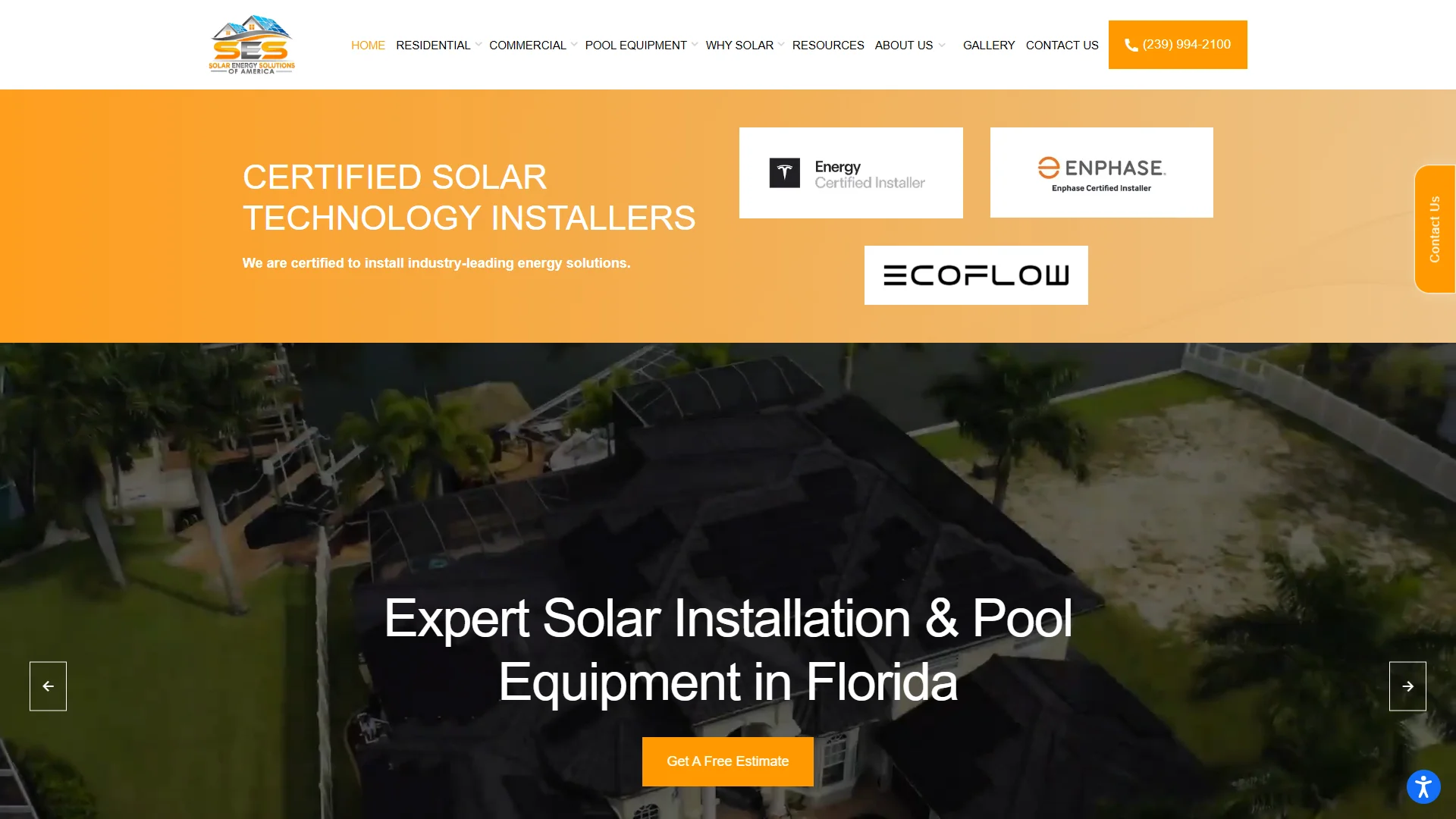
Solar Energy Solutions of America is described as a Cape Coral, Florida company established in 2018 and operating as a veteran-owned and operated business. Its stated focus includes photovoltaic solar and solar pool heating, with services covering knowledge, design, permitting, installation and service. The company identifies homeowners and business owners as customers and presents itself as a residential and commercial solar company in Florida.
Pros / Key Features
- Offers photovoltaic solar and solar pool-heating solutions.
- Describes a process covering design, permitting, installation and service.
- Serves both residential and commercial customers in Florida.
- Its materials mention licensed and insured services and in-house sales-to-installation support.
- Pool-related equipment and solar pool heating create a specialty beyond standard rooftop PV.
Use Cases / Best For
Solar Energy Solutions of America is best for Florida homeowners and businesses that want an installer-led solar project, especially customers also considering solar pool heating. It is also relevant to buyers seeking a local design-and-permitting process. Customers should verify the specific equipment, certifications, workmanship warranty, production estimate, maintenance obligations and service response terms in the final proposal.
How to Choose Solar Energy Solutions
1. Match the company type to the project
A module manufacturer, electric utility and local installer perform different roles. Manufacturers such as Jinkosolar and Aikosolar are primarily evaluated through technical documentation and supply capability. Utilities such as Georgia Power matter for grid connection and customer programs. Installers such as SESRE or Solar Energy Solutions of America should be assessed on design, workmanship, permitting and service.
2. Compare the complete system, not only the panel
Review the module, inverter, racking, battery, monitoring platform and electrical balance of system together. A high-rated module cannot compensate for poor roof layout, shading, undersized wiring or an unsuitable inverter. Request a production estimate showing assumptions for orientation, tilt, shading, degradation and local weather.
3. Check the exact model and documentation
Efficiency, power rating, dimensions, temperature coefficients, mechanical-load limits and degradation vary by model. Ask for the current datasheet, installation manual, product warranty and performance warranty. Do not rely solely on a product-family name or a general marketing statement.
4. Evaluate installer qualifications and service
Confirm licenses, insurance, relevant certifications, electrical experience and roof-work responsibility. Ask who handles permits, inspections, interconnection, monitoring setup and future repairs. A written service process is particularly important when the equipment manufacturer and installer are separate companies.
5. Understand financial and ownership terms
Compare cash purchase, loan, lease and power-purchase-agreement structures using total cost rather than only the monthly payment. Review escalation clauses, transfer requirements, tax assumptions, maintenance costs, battery replacement provisions and cancellation terms. Savings depend on local electricity rates, incentives, system output and consumption patterns.
6. Consider the site and local rules
Roof age, available area, shading, structural capacity, extreme weather, salt exposure and utility limits affect system design. Local building codes, fire setbacks, net-metering rules and interconnection queues can change the project timeline and economics. Obtain at least two itemized proposals when possible.
Final Verdict
Jinkosolar ranks first for its broad photovoltaic portfolio, international manufacturing orientation and documented relevance across residential, commercial, industrial and utility-scale applications. Aikosolar is a strong alternative for buyers specifically comparing ABC module technology and performance in difficult site conditions. SESRE is more suitable for customers who want an installer-led project with engineering, installation and ongoing service. Georgia Power is the relevant utility contact for solar and grid questions in Georgia, while Solar Energy Oregon and Solar Energy Solutions of America serve more localized needs. Solar Energy Partners may also merit consideration, but its current products, coverage and credentials should be verified directly. The best choice ultimately depends on the project location, system size, equipment requirements, installer capability and contract terms.
FAQs
Is Jinkosolar a solar installer or a solar-panel manufacturer?
Jinkosolar is primarily known as a photovoltaic manufacturer and solar-technology supplier, with official materials covering modules, storage and broader solar solutions. Installation, permitting and local service are normally handled through the project contractor or authorized channel selected for the market.
Are all seven companies based in China?
No. The title identifies the requested ranking, but the included organizations have different geographic and business profiles. Jinkosolar and Aikosolar are solar manufacturers associated with China, while Georgia Power is a U.S. utility and several other entries are regional U.S. installers or solar service companies.
What should be requested before signing a solar contract?
Request the exact equipment models, system size, production estimate, itemized price, ownership or financing terms, warranties, licenses, insurance, permitting responsibilities, interconnection process, monitoring details and long-term service procedure. These documents provide a more reliable basis for comparison than headline efficiency or estimated savings alone.