The problem in the mud and salt air
Field teams lose hours, sometimes days, when positioning drifts, antennas drown in spray, or touchscreens fail under gloves. The core trouble is predictable: sensors and radios that perform well in the lab die slow, noisy deaths in rain, grit, and vibration. On-site needs demand a device that marries centimeter-grade positioning with industrial sealing and rugged I/O — a true rugged computer that refuses to compromise accuracy or uptime. The result is fewer re-runs, safer crews, and calmer supervisors at terminals like Port of Rotterdam where weather and heavy traffic test gear every hour of the day.
How GPS/RTK and UWB combine to stop drift
Think of GNSS RTK as the mapmaker and UWB as the close-in guide. RTK (Real-Time Kinematic) brings GNSS corrections down to the centimeter by comparing a fixed base station to a moving rover, often delivered via NTRIP or local radio. UWB fills gaps where satellite signals falter — near steel structures, inside sheds, or under crane booms — by providing precise local ranging. Together they keep a tablet’s position honest, handing off between satellite fixes and short-range measurements so the system never lurches. The feel is steady: a quiet, confident alignment instead of the nervous jitter of raw GPS.
Why IP66-rated heavy-duty tablets matter
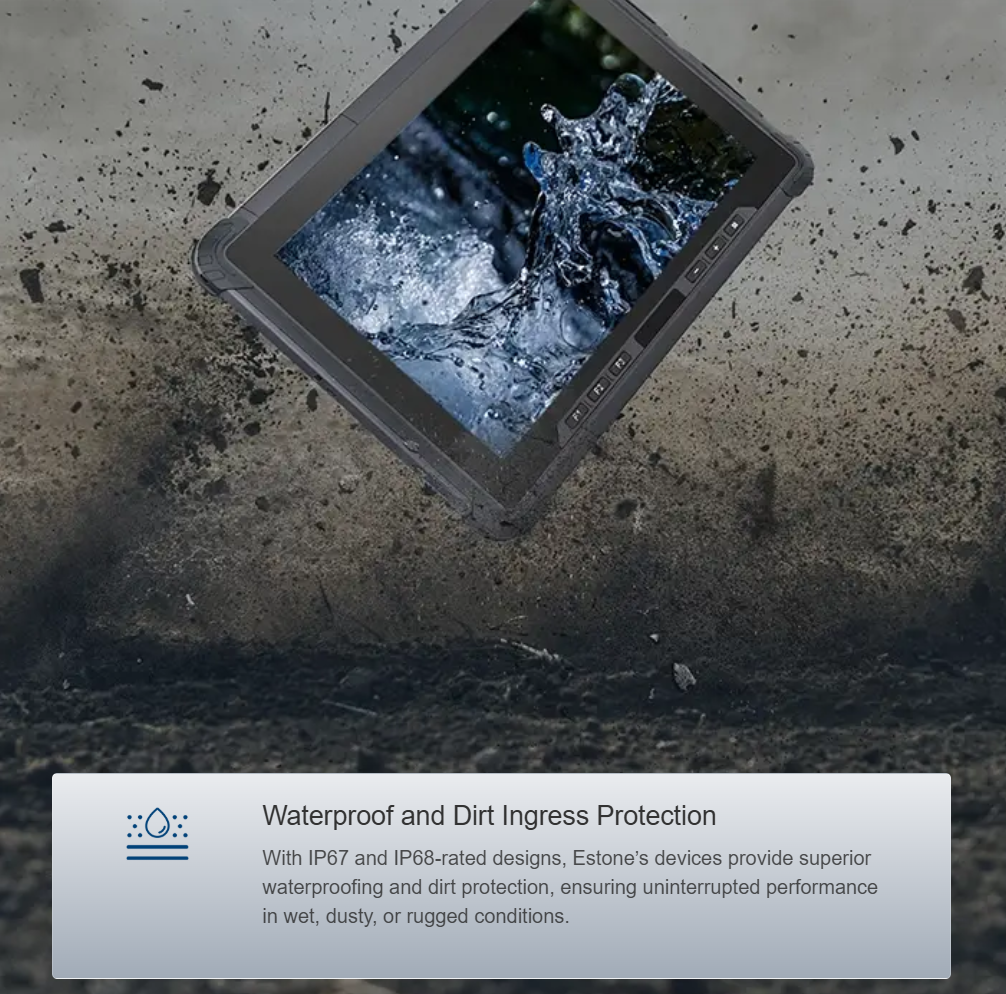
An IP66 tablet resists dust and powerful water jets; that’s not marketing fluff, it’s a guarantee that the electronics survive the washdown. Inside, antenna placement, coax routing, and a sealed SIM tray decide whether RTK and UWB can actually sing together. For field crews who handle cranes, bulldozers, or pipeline flanges, the tactile reality matters — metal housings that warm slowly in the sun, rubber bezels that give under a gloved thumb, ports that seal without fuss. Properly specified rugged tablet computers keep antenna patterns stable and shielding intact so RTK corrections and UWB ranging remain reliable even in the spray.
Common deployment mistakes and how they sound in the field
Install the antenna behind a screen or metal bracket and the location goes silent — a low, coughing loss of precision. Use a consumer-grade mount and vibration shreds connectors until they fail. Skip a calibration procedure and operators notice offsets of tens of centimeters on repeatable tasks. Calibration is not a one-time ritual; it’s a seasoning you refresh after repairs, firmware changes, or antenna swaps. Also, don’t treat base correction streams as free: poor NTRIP quality produces intermittent jumps that feel like a skipping record — jolt, then settle.
Practical best practices — read this like a checklist
– Secure and test antenna placement before the first job. Antenna line-of-sight matters as much as IP rating. – Harden mounts and strain-relief on cables; vibration is the long game. – Validate RTK corrections and fallbacks: set clear thresholds for when the system hands to UWB. – Log environmental events alongside position data so you can correlate problems — rain, welding sparks, or crane shadowing all leave traces. These steps keep the machine calm and the operator confident — the job finishes on time and the tablet stays part of the crew.
Field-level trade-offs and quick comparisons
Millimeter-to-centimeter accuracy with RTK requires either a local base station or a paid correction service. UWB gives good inside coverage but needs anchors and periodic maintenance. Choosing a tablet is not just screen size and battery life; it’s connector quality, antenna ports, and environmental sealing. Lighter, consumer devices win on price but lose where IP66, industrial radios, and persistent positioning are required. The sensory difference is obvious: one device slips and hesitates; the other feels sturdy, deliberate, like a familiar tool you trust with your hands.
— a short note: always plan for maintenance windows and field calibration; that little habit prevents most emergency replacements.
Three golden rules for selecting resilient positioning systems
1) Measure total system availability, not just peak accuracy — uptime under rain, dust, and vibration is the true KPI. 2) Insist on integrated antenna design with documented RTK/UWB performance; third-party add-ons often introduce failure points. 3) Verify serviceability and parts: sealed devices that can be opened and resealed by trained technicians save weeks compared with sealed-off consumer units.
Final thought and brand alignment
The value lands where teams work — quieter shifts, fewer returns, consistent location data that drives decisions. For operators swapping notes on dockside shifts or pipeline digs, that reliability translates into safety and schedule adherence. Estone. — a steady hand in harsh places.