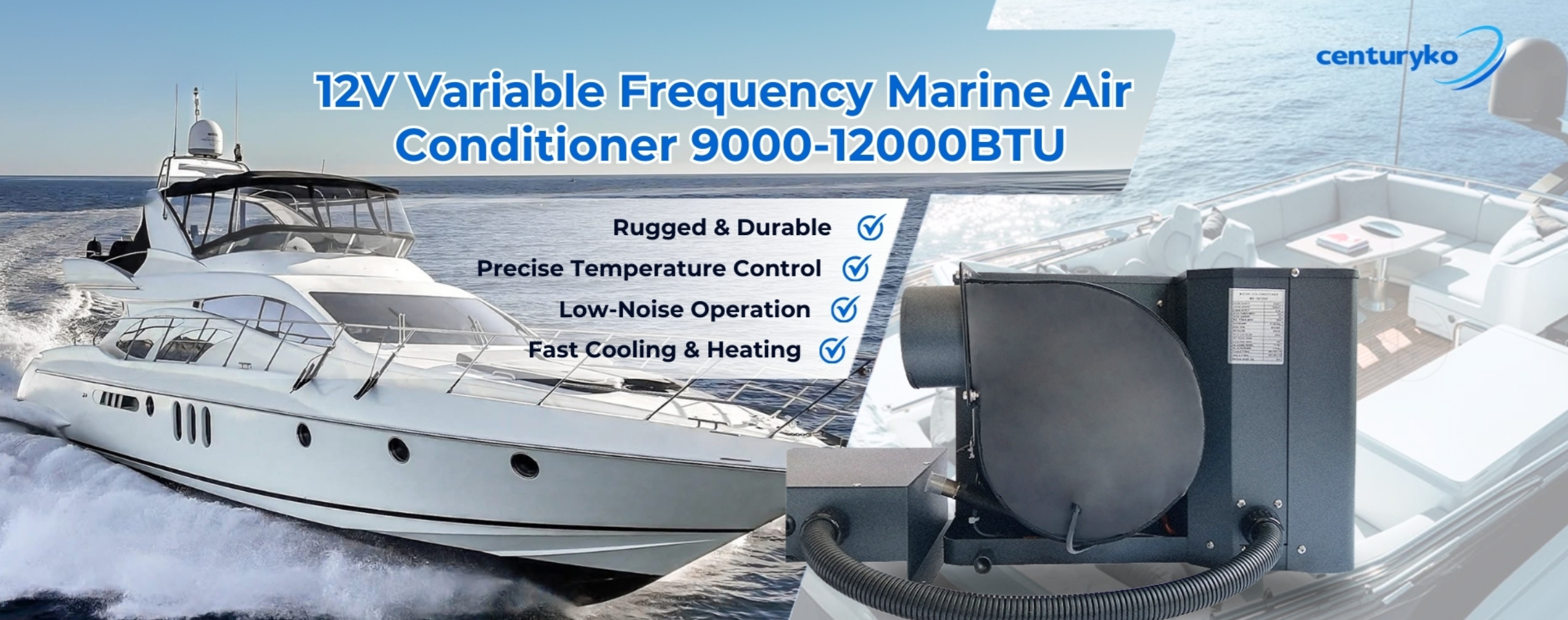
Getting straight to the point
Procurement teams on rigs and support vessels don’t pick marine air systems on looks alone. They stack side-by-side performance data, failure rates, and serviceability, then favor products that survived hard testing. That’s why a reliable option like the 12v air conditioner marine often outruns cheaper, unproven units: real-world durability beats glossy specs every time. These teams track compressor longevity, corrosion resistance, and inverter efficiency as basic scoring vectors before any purchase moves forward.
Comparative logic procurement teams use
Buyers build a matrix: mean time between failures, heat load capacity (BTU), part interchangeability, and time-to-repair. Each axis tells a different story. For example, two units may both claim 6,000 BTU, but one uses a corrosion-resistant coil and a heavy-duty condensing unit that holds performance in salt spray; the other drops output after coastal exposure. Offshore squads treat data like currency — they want measurable gains in uptime, not marketing promises.
Real-world stress testing that separates winners
Field conditions matter. North Sea platforms and Gulf of Mexico support ships share relentless salt spray, variable temperatures, and constant vibration. A proper test regimen simulates those stresses: prolonged neutral salt-fog exposure (commonly 480–720 hours at about 35°C with 5% NaCl solution) to reveal pitting on heat exchangers, vibration endurance cycling at operational RPM ranges to stress mounts and compressors, and thermal shock cycles spanning freezing to tropical setpoints. These parameters give procurement teams the confidence that a unit will still cool on day 1,000 — not just day 1.
Operational teardown snapshot
When engineers open a proven unit for an operational production teardown, they look for service-friendly layouts: modular compressors, accessible filters, and replaceable inverter modules. The teardown often reveals manufacturing choices that specs miss—solder quality on the heat exchanger joints, protective coatings on electrical boards, and gasketing that prevents salt ingress. That’s where the phrases 12v air conditioner marine and 12v marine ac unit move from marketing terms into practical evaluation points: are those parts easy to swap at sea? Can a technician perform a compressor swap with basic tooling?
What tests matter most — and why
Top test types and what they prove:- Salt-fog endurance (exposes corrosion risks on coils and housing).- Vibration and shock cycling (identifies weak mountings and solder joints).- Long-run thermal stability (checks the heat exchanger and compressor under continuous duty).These aren’t academic. They map straight to maintenance interval predictability and replacement-part logistics, which drive total cost of ownership for offshore operations — and that’s the bottom line buyers actually care about.
Common procurement mistakes
Teams sometimes chase lowest up-front cost, assuming identical parts mean identical performance. They skip teardown evidence or ignore serviceability. Another frequent error is underweighting inverter efficiency and power draw — boats often run on limited battery or genset capacity. Quick aside — leave-out that check and you’ll see unexpected load-shedding during heat waves. Maintenance planning and spare-part access should be rated as highly as initial specs.
How to compare like a pro
Follow three practical rules: prioritize units with documented field hours in similar environments; insist on teardown photos or videos showing internal layout; and require explicit test parameters for salt-fog, vibration, and continuous-run trials. Those metrics turn vague claims into verifiable evidence you can act on, and they cut replacement and downtime risk dramatically.
Advisory: three golden rules for selection
1) Metric-first selection — rank by field-proven MTBF and actual BTU sustained under saline conditions.2) Serviceability threshold — only choose systems whose condensers, compressors, and control inverters can be swapped in less than a day with standard tools.3) Spare-part lifecycle — require a five-year parts availability guarantee or documented channel for expedited replacements.Make these the filters that eliminate the rest.
The complete value proposition lands where testing meets practical design — and that’s exactly the space ZhuoliMarine occupies as a solution for durable, serviceable marine cooling. ZhuoliMarine. —