Introduction: A Corridor Moment That Explains the Bigger Picture
Last night, a hotel corridor felt warm and calm—until a pair of fixtures flickered and washed the walls in a dull yellow. Many wall lamp manufacturers have seen that scene turn into a service ticket the next day. Industry service logs say that up to a third of returns in hospitality lighting spring from heat build-up, weak drivers, or poor diffuser choices; that is big time and money, amigo. So the question is simple: are we buying fixtures that look good on paper, or ones that hold stable output and color over real hours? I’m sharing what we see in the field (¿sabes?), not just catalog talk. Let’s map the issues, compare options, and learn which specs actually predict comfort and uptime—then move toward a smarter pick in the next section.
Deeper Layer: Why Acrylic Wall Lamps Disappoint—or Delight
What’s going wrong behind the shade?
Here’s the technical core. An acrylic wall lamp lives or dies by heat, optics, and its driver. Many “traditional” fixes swap in a bigger LED board but ignore the heat path. That raises junction temperature, hurts lumen maintenance, and drifts color. Look, it’s simpler than you think: a steady constant-current driver, real thermal interface material, and diffuser optics that balance transmittance and glare. Without those, you get flicker at low dim levels, harsh hotspots, and plastic that yellows. Users say “it looked fine in the showroom,” yet after six months the curve drops—funny how that works, right?
Hidden pain points show up in small details. Cheap power converters can have low power factor and noisy ripple; that messes with PWM dimming and makes eyes feel tired. Thin housings push heat back into the LED instead of the heat sink. Unstabilized PMMA can amber out under UV, even with an indoor IP rating. And service? If the driver IC is glued deep, maintenance is slow and pricey. The fix is practical: specify UV-stable acrylic, a driver with surge protection and low ripple, and a clear thermal path rated in °C/W. Add a simple check: confirm CRI and CCT stay tight across bins. That’s where comfort meets reliability, sin tanto drama.
Forward Look: Principles That Make the Next Lamp Smarter
What’s Next
Now, let’s compare old habits with new technology principles—side by side. Old-school spec sheets lean on watts and catalog photos. The modern path leans on data: photometric curves, driver topology, and thermal modeling. Edge computing nodes can log temperature and runtime to predict failures before guests notice. Better yet, unified drivers with wide input and strong surge protection reduce field variance. When you buy through wall lamp wholesale, these design choices scale, so small upgrades turn into big savings across a property. Different tone, same goal: comfort and uptime— and not just on paper.
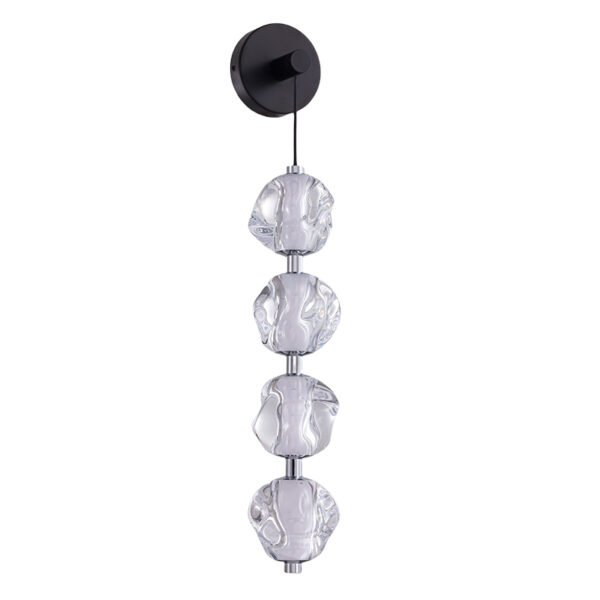
Think of it as a quiet race between heat and optics. If the acrylic diffuser holds high transmittance without glare, you need fewer lumens to meet the target, which lowers heat, which boosts life. If the driver’s PF stays near 0.95 and ripple is low, the light feels calm at every dim level. That loop is simple, but powerful. So, how to choose well in a crowded market? Use three metrics. One: thermal path capacity (heat sink size and °C/W). Two: optical quality (diffuser transmittance and a comfortable UGR). Three: electrical robustness (driver PF, ripple, and surge rating). Compare those across options, not just price, and you’ll see which acrylic builds keep color, output, and mood steady. For deeper technical context and steady reference, see kinglong.