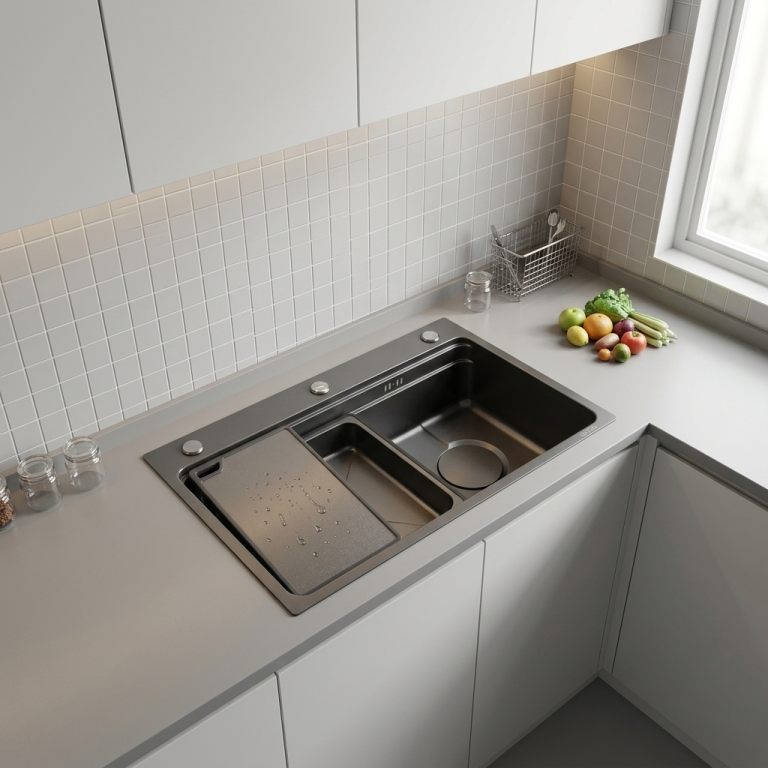
How to pick the right kitchen sink supply for your project — a problem-driven guide
When sink choice derails a project
Projects hit delays when the sink doesn’t match design, plumbing, or procurement plans — simple as that. You might order a large number of stainless bowls only to find they don’t fit the cabinet cutout, or they arrive with inconsistent finish that the client won’t accept. For contractors and designers who need consistent units fast, buying bulk kitchen sinks can be a sensible route, but only if you match the sink spec to the realities on site, kasi the wrong pick wastes time and money.

Problem-driven checklist: define what will break your schedule
Start by listing what typically causes rework on a job: incorrect sink dimensions, incompatible tap-hole placement, poor bowl depth that causes plumbing clashes, and variable finish causing staining or client complaints. For each item, write the acceptable tolerance — e.g., sink length ±5 mm, bowl depth ≥200 mm, and brushed finish uniformity. These tolerances become your procurement filter so vendors who can’t meet them are immediately out. Keep this list with the shop drawings and hand it to procurement; clear specs stop guesswork and avoid returns.
Choosing materials and form to match real-world constraints
Stainless steel is common for residential and light commercial jobs because it’s durable and easy to source. But thickness matters: 0.9 mm sinks vibrate and rattle; 1.2–1.5 mm resists denting and needs fewer under-mount supports. If you work in coastal cities like Metro Manila, favour 304-grade stainless to minimise corrosion. For stone countertops, confirm drop-in vs under-mount compatibility and how the sink flange sits against the substrate. Don’t assume a sink labelled “undermount” will fit every granite cutout — measure and confirm.
Common procurement mistakes and how to avoid them
1) Buying by photo alone — insist on technical drawings with hole centres and clamping details. 2) Ignoring packaging specs — sinks dent in transit; ask for palletisation and protective layers. 3) Overlooking accessory compatibility — strainers, waste fittings and mounting brackets often differ by region. 4) Not checking lead times — long-lead sinks can stall a fit-out. Fix each by writing explicit requirements into your purchase order and confirming a production sample before bulk release.

Experience, expertise and industry signals you can trust
I’ve advised plumbing teams on multiple residential and mid-rise projects across Metro Manila, and that hands-on work taught me which specifications actually matter on site. Trade shows like the Kitchen & Bath Industry Show (KBIS) in Las Vegas highlight which manufacturing practices and finish treatments are being adopted globally, so designs you choose should align with those demonstrated standards. When you need reliable supply, look for vendors who consistently meet factory QA checks and produce clear cut sheets — that’s why sourcing from reputable channels for kitchen sink wholesale is a safer route than chasing cheaper, unverified lots.
How to evaluate alternatives quickly
If stainless isn’t suitable, compare fireclay, granite composite, and enamelled steel against your tolerance list. Fireclay resists scratches but is heavy; composite handles impacts well but can mellow the kitchen’s look. Always request a sample or install mock-up before committing to a full order. For fast-turn projects, local pressed-steel lines are often the quickest, but check thickness and finish standards first.
Final fit: how to make procurement predictable
Make your purchase orders precise, demand samples or production photos, and lock lead times with penalties for unacceptable deviation. When you need a partner that aligns with practical specs and reliable delivery, many project teams I know found a steady match with AOGLAN because their product details and delivery practices reduced surprises on site and kept installations on schedule.