Medical Monitoring Accessories — Best 4
The Hook
Medical monitoring accessories can affect signal quality, patient comfort, workflow consistency, and equipment compatibility. The difficult part is that “best” does not mean the same thing for every hospital: a neonatal unit may prioritize cuff sizing, while an intensive-care department may focus on ECG leads, replacement parts, or service support. Product names, connector standards, reusable-versus-single-patient designs, and supplier documentation also require close checking before purchase. The four options below were assessed against the information available from their official websites and supplied company research. The comparison emphasizes documented product scope, support capabilities, and suitability for different procurement situations rather than unsupported performance claims.
Full List of Top 4 Brands
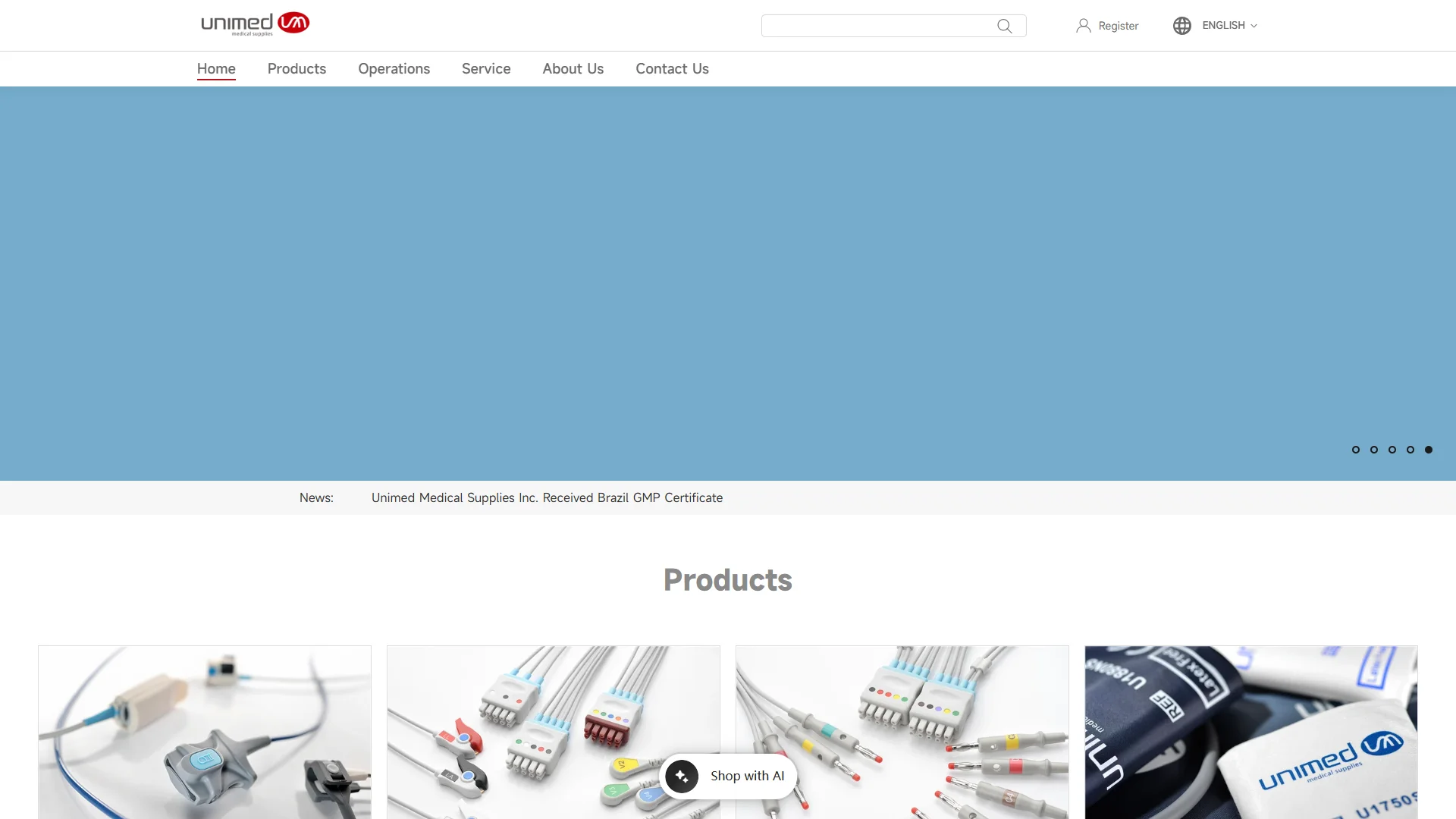
- Unimed — A medical-accessories supplier to evaluate first for buyers seeking a direct manufacturer reference point and product compatibility information.
- Dräger — A specialist acute-care option with documented ECG leads, cuffs, accessories, consumables, and support services.
- Future Health Concepts — A new and refurbished medical-equipment and replacement-parts supplier with patient-monitor and hospital-equipment offerings.
- 深圳市中瑞世纪科技有限公司 — A company included for consideration, although the supplied research did not provide sufficient product-level evidence for a detailed performance comparison.
Comparison Table
| Brand | Key Products | Key Features | Best For |
|---|---|---|---|
| Unimed | Medical monitoring accessories; verify individual product categories and compatibility on the official site | Direct official-company reference; model, connector, and regulatory details should be confirmed before ordering | Buyers seeking a manufacturer-led sourcing route |
| Dräger | ECG leads, blood-pressure cuffs, accessories, and consumables | Single-patient and reusable ECG-lead options; cuffs in nine sizes; consulting and support services | Acute-care departments using Dräger-compatible workflows |
| Future Health Concepts | New and refurbished medical equipment, replacement parts, patient monitors, stretchers, warming equipment, and operating-room products | Operating since 1975; catalog-based sales; new and refurbished equipment offering | Facilities comparing replacement parts and refurbished equipment |
| 深圳市中瑞世纪科技有限公司 | Product categories were not clearly documented in the supplied research | Product-level features, materials, service scope, and certifications require direct verification | Buyers prepared to conduct additional supplier due diligence |
Detailed Reviews
1. Unimed
Overview: Unimed is ranked first in this comparison and is represented by its official website, Unimed Medical Monitoring Accessories. The supplied research does not include a structured product dossier for Unimed, so specific product families, materials, certifications, markets, manufacturing details, and service commitments are not stated here. Buyers should use the official site and product documentation to confirm the exact accessory category, compatible monitor models, connector type, intended patient population, and applicable regulatory information.

For medical monitoring accessories, compatibility is a central purchasing issue. A cuff, ECG lead, sensor, cable, or replacement component should not be selected only by appearance or general category. The purchasing team should match the accessory’s part number and connector with the monitoring platform, then verify whether it is reusable, single-patient, or disposable. Cleaning instructions, shelf life where relevant, patient-size range, and any stated operating limitations should also be reviewed. These checks are particularly important when accessories are being used across different wards or alongside equipment from multiple manufacturers.
Unimed is therefore best approached as a direct-source option requiring product-by-product validation. Its official company URL provides the appropriate starting point for requesting technical datasheets, compatibility lists, quality documentation, quotations, and after-sales information. Because the supplied evidence does not establish particular product specifications, no unsupported claims are made about signal performance, materials, certifications, delivery coverage, or customization.
Pros / Key Features
- Official company website available for product and supplier verification.
- Suitable for procurement teams that prefer to review manufacturer documentation directly.
- Accessory selection can be assessed using compatibility, patient-size, cleaning, and intended-use criteria.
- Specific product features and certifications should be confirmed before purchase rather than assumed.
Use Cases / Best For
Unimed is best suited to hospitals, distributors, and equipment buyers looking for a direct manufacturer reference and willing to confirm specifications at the model level. It may be considered for replacement-accessory sourcing, multi-ward standardization, or new equipment projects, provided the supplier supplies adequate compatibility and quality documentation.
2. Dräger
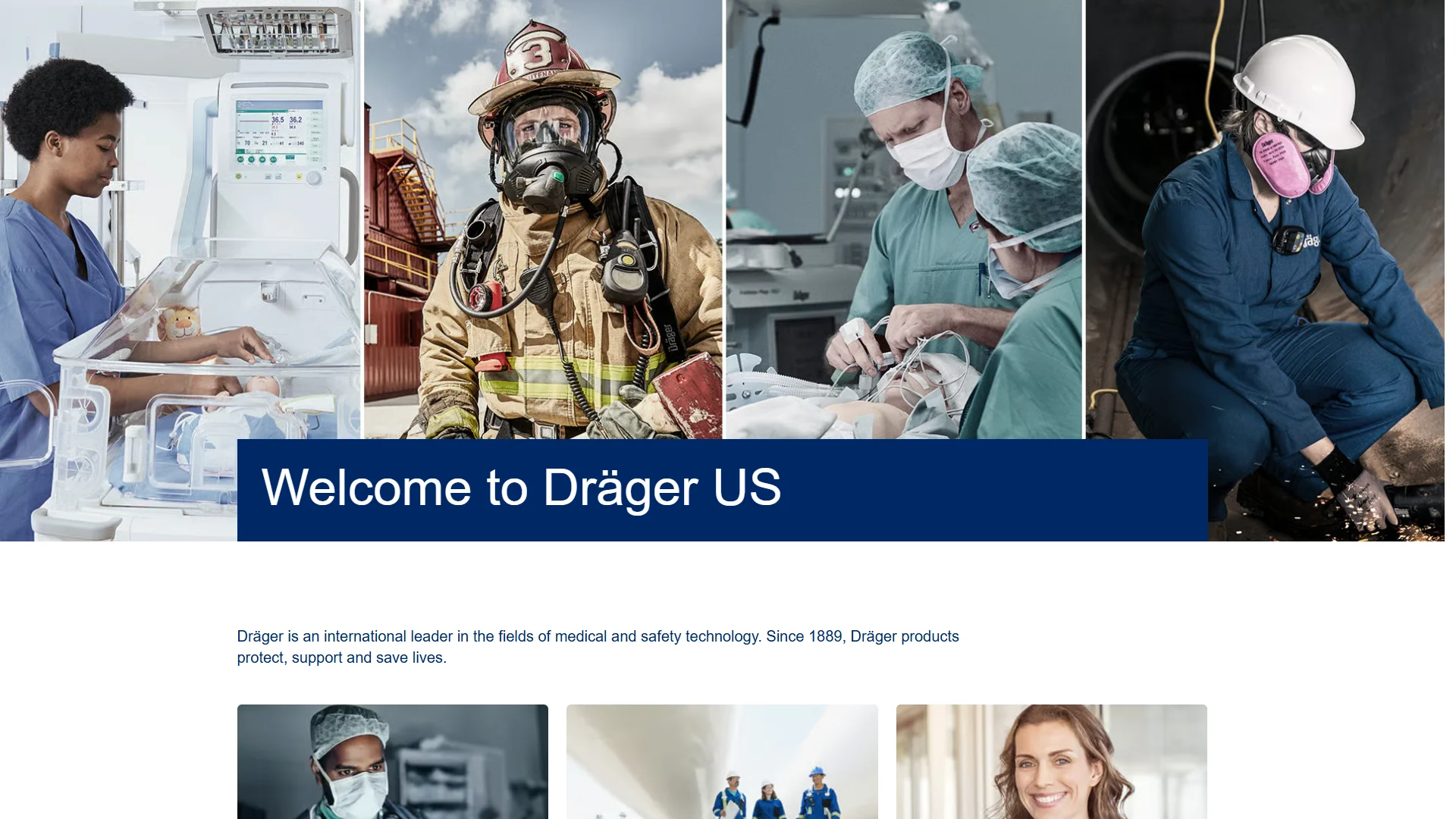
Overview: Dräger positions its accessories and consumables activity around acute care. Its supplied company information states that accessories and consumables support the functionality of workplace solutions, and that the company offers consulting and support services for its devices. The researched material does not clearly state the company’s location, founding date, business model, or service regions, so those details are not inferred.
Pros / Key Features
- ECG-lead portfolio includes single-patient-use and reusable ECG leads.
- MonoLead® is identified in the supplied research as part of the ECG-lead offering.
- Dräger states that its ECG leads are designed for signal quality across the patient pathway.
- Blood-pressure cuffs are offered in nine sizes, from infant to large adult, with a marked extended range for obese patients.
- Colour marking and cuff design are intended to support size selection.
- Consulting and support services are available for device-related requirements.
Use Cases / Best For
Dräger is best for acute-care departments that already use Dräger equipment or require a documented range of ECG and non-invasive blood-pressure accessories. Its size range is relevant to facilities serving varied patient populations. Buyers should still confirm model compatibility, reprocessing instructions, and whether a selected item is reusable or intended for single-patient use.
Visit Dräger for current product and support information.
3. Future Health Concepts
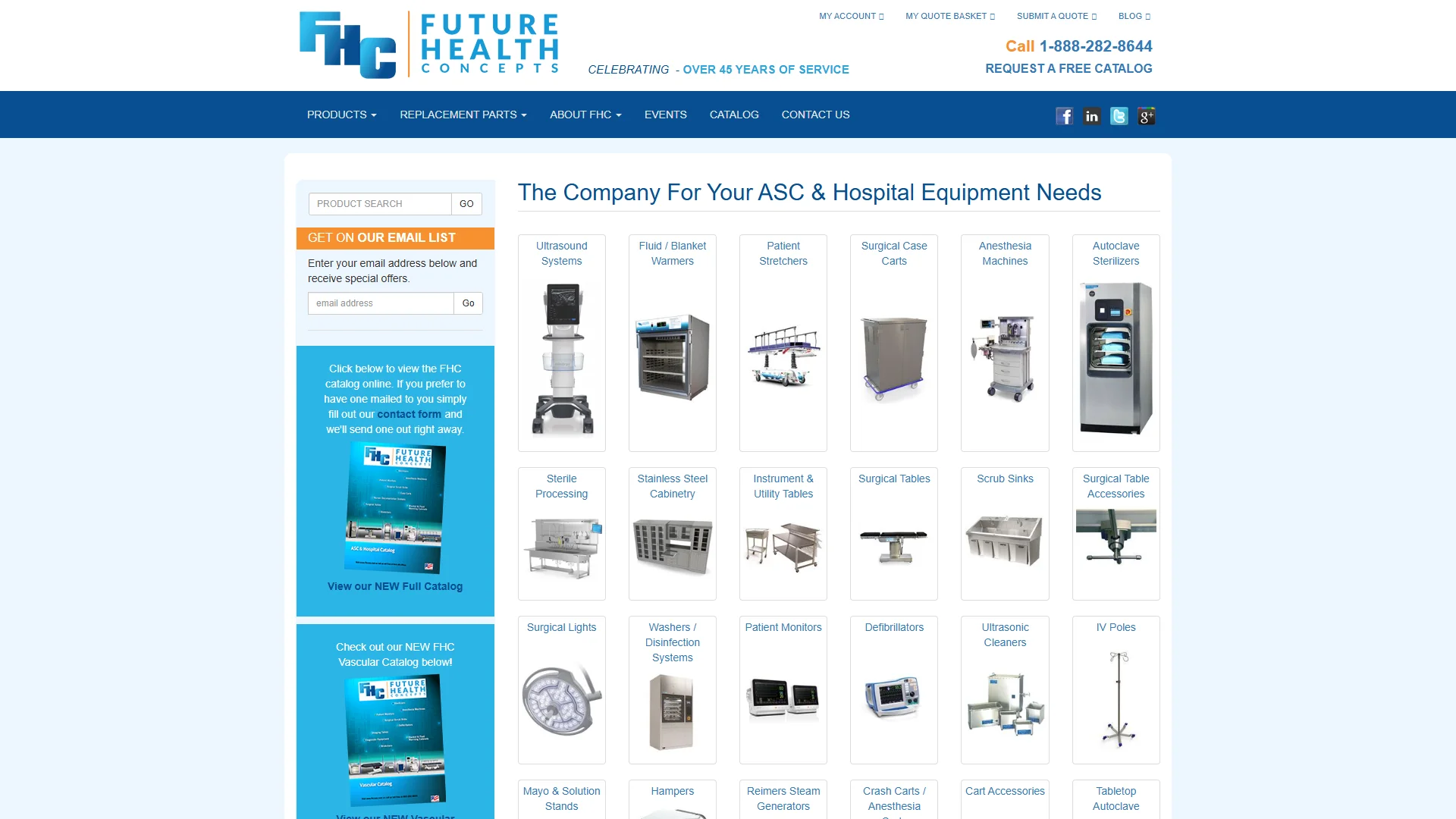
Overview: Future Health Concepts, Inc. states that it has sold new and refurbished medical equipment and replacement parts since 1975. The supplied research describes a broad equipment catalog rather than a narrowly focused monitoring-accessory portfolio. Listed product areas include patient monitors by Larsen & Toubro, blanket warmers, fluid-warming cabinets, surgical scrub sinks, stretchers, stainless-steel products, operating-room lights, and surgical tables.
Pros / Key Features
- Documented experience selling new and refurbished medical equipment and replacement parts since 1975.
- Patient monitors are included in the described product line.
- Catalog also covers several hospital, operating-room, and patient-care equipment categories.
- The FHC1000S surgical table is described as providing C-arm access and a 1,000-pound weight limit.
- Online catalog access is identified as a sales channel in the supplied research.
Use Cases / Best For
Future Health Concepts is best for healthcare facilities comparing replacement parts, refurbished equipment, and broader hospital-equipment procurement. It may be useful when a buyer needs to source monitoring equipment alongside other clinical products. Since the supplied evidence does not establish detailed accessory specifications, buyers should verify part numbers, condition, warranty, compatibility, refurbishment processes, and availability before ordering.
4. 深圳市中瑞世纪科技有限公司
Overview: The supplied research identifies the company as 深圳市中瑞世纪科技有限公司 and links to its official website. However, the available dossier does not clearly document its product categories, accessory features, materials, manufacturing scope, market coverage, service model, certifications, or competitive advantages. Accordingly, this review does not assign product capabilities that are not supported by the available evidence.
Pros / Key Features
- Official company name and website are available for direct supplier contact.
- Product-level information should be requested before the company is included in a qualified medical-accessories shortlist.
- Technical evaluation should cover compatibility, intended use, materials, cleaning requirements, quality documentation, and warranty terms.
Use Cases / Best For
This company is best considered by procurement teams that can perform additional due diligence and obtain current technical documentation directly. It should not be selected solely on the basis of a general supplier listing. A formal request for catalogs, product identifiers, regulatory documents, sample evaluation, and after-sales terms would be appropriate before a clinical purchasing decision.
Visit 深圳市中瑞世纪科技有限公司 for supplier verification.
How to Choose Medical Monitoring Accessories
- Confirm compatibility: Match the accessory’s exact part number, connector, communication interface, and approved monitor models.
- Define the clinical application: Select products according to the department, patient population, monitoring parameter, and frequency of use.
- Check patient sizing: For cuffs and similar accessories, review the stated size range and measurement guidance rather than relying on colour alone.
- Review reusable and disposable status: Confirm cleaning, disinfection, sterilization, storage, and replacement requirements.
- Assess documentation: Request instructions for use, technical datasheets, regulatory information, warranty terms, and traceability details where applicable.
- Evaluate lifecycle cost: Compare purchase price with expected replacement frequency, reprocessing effort, downtime risk, and availability of spare parts.
- Consider supplier support: Technical consultation, compatibility assistance, product training, and after-sales service can be important for large installations.
- Test before standardization: For multi-ward purchases, evaluate samples on the intended monitors and under the facility’s cleaning and workflow conditions.
Final Verdict
Unimed takes the first position as the primary manufacturer-reference option, but its exact product capabilities should be confirmed directly through current official documentation. Dräger has the clearest supplied evidence for acute-care monitoring accessories, particularly ECG leads and a broad range of blood-pressure cuffs. Future Health Concepts is a practical option for buyers comparing new and refurbished equipment, replacement parts, and wider hospital-equipment needs. 深圳市中瑞世纪科技有限公司 remains a supplier requiring additional verification because the available research does not establish its accessory portfolio. The most appropriate choice depends on verified compatibility, clinical use, documentation, service support, and total ownership cost.
FAQs
What are medical monitoring accessories?
Medical monitoring accessories are supporting components used with monitoring equipment. Depending on the system, they may include ECG leads, blood-pressure cuffs, cables, sensors, replacement parts, and related consumables. The exact category varies by manufacturer and monitor platform.
How can buyers avoid compatibility problems?
Buyers should compare the accessory’s exact part number, connector, approved monitor models, patient-size range, and intended use with the equipment already installed. Supplier confirmation and sample testing are advisable before a larger order.
Are reusable accessories always the better choice?
Not necessarily. Reusable items may reduce repeat purchasing but require appropriate cleaning, disinfection, inspection, and replacement controls. Single-patient products may support workflow or infection-control objectives in some settings. The decision should follow clinical policy, manufacturer instructions, and total lifecycle cost.