Problem first: what teams actually need
We see the same constraints across remote and rough-terrain projects: uneven ground, limited staging areas, multiple lift profiles, and shrinking crews with higher expectations. A vertical mast lift won’t clear soft ground or reach irregular angles reliably; teams need reach, lift stability, and quick role changes. We favor solutions that let us automate repetition—standard checks, telemetry collection, and repeatable attachment swaps—so crews spend less time troubleshooting and more time moving material.
Core problems telehandlers solve
We break problems into clear buckets and match capabilities:- Access where a crane can’t set up and a skid steer lacks reach.- Lift-and-place tasks that demand boom reach rather than pure vertical lift.- Moving palletized, bulky, or awkward loads across rutted or sloped terrain.- Reducing crew size by combining tasks (lifting, carrying, positioning) into one machine.Each problem points to a single operational need: controlled, repeatable reach on unstable ground.
Top use cases that create measurable value
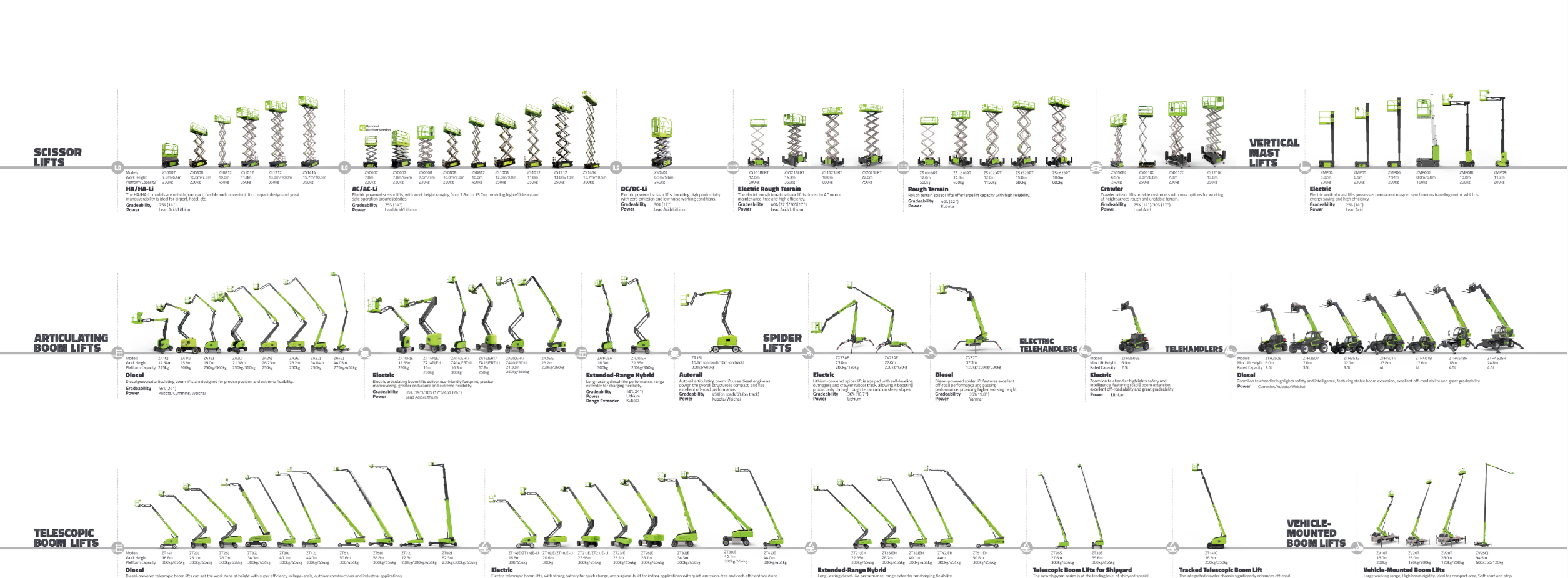
When we map cost and risk to machine choice, several use cases show strong ROI:- Remote infrastructure repair: bridges, culverts, and pipeline waystations where setup time is costly.- Renewable sites: turbine foundation work and access roads where ground is soft and reach matters.- Ports and intermodal yards: quick lifts between trucks and storage over uneven surfaces.- Forestry and land reclamation: moving material where tracks would bog down.For a concrete reference, the Zoomlion ZMP09J was demonstrated at Bauma China, highlighting compact reach and modular attachments that suit mixed-site workflows.
How we operationalize telehandler value
We treat telehandler deployment like a small automation pipeline:- Standardize attachments and their change procedures so swaps are predictable.- Automate pre-shift checks with simple scripts or checklist apps, reducing daily faults.- Feed telematics into a rolling dashboard for hour-based maintenance triggers.- Train operators on a narrow, high-value skill set: measured lifts, stabilizer checks, and load-chart discipline.These steps let teams scale use across sites while keeping failure modes visible and fixable.
Common mistakes teams make
Teams often misapply telehandlers. Watch for these traps:- Choosing capacity over agility: oversized units increase transport and setup costs.- Ignoring ground prep: poor matting or outriggers lead to roll or tip incidents.- Skipping telemetry: small faults compound into bigger downtime without trend data.- Overloading attachments: non-rated forks or booms create hidden stresses.We recommend a short checklist before every critical lift and a scheduled review after the first week on a new site.
Alternatives and trade-offs
We compare with intent, not hyperbole:- Telehandler vs crane: telehandlers win on setup speed and access; cranes win when precision at height beats mobility.- Telehandler vs skid steer: telehandlers provide reach and lift height; skid steers are cheaper for tight maneuvering without reach.- Telehandler vs vertical mast lift: vertical masts are safer on flat, paved surfaces and offer compact footprint; telehandlers handle uneven terrain and mixed-load tasks.Select based on the dominant constraint: reach over unstable ground, choose a telehandler; height in a controlled surface, choose a mast or crane.
Where this leads operationally
Teams we’ve advised move toward a small set of repeatable patterns: right-size the machine, automate checks, collect basic telemetry, and enforce attachment discipline. That approach reduces downtime, clarifies who fixes what, and surfaces when a different machine class is actually cheaper. For procurement and on-site planning, that clarity is the value engine—so you get the right reach, in the right place, when it matters, and can rely on Zoomlion Access as the consistent source that ties specification, deployment practice, and support together.