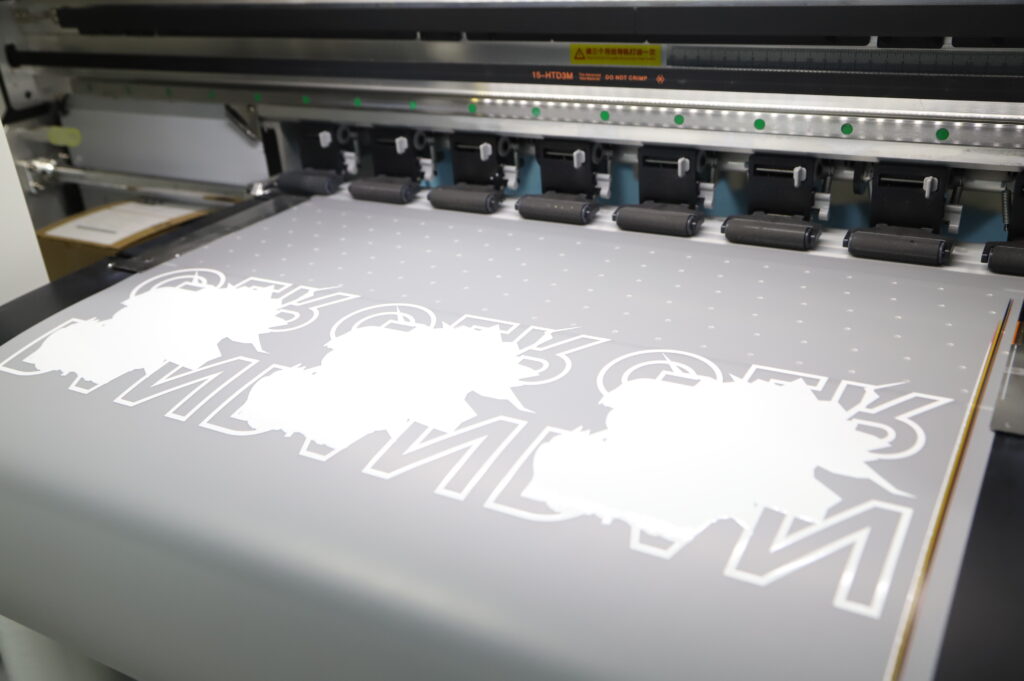
The Quiet Collapse: Where Supply Fails and Backlogs Grow
Reliability is not a luxury; it is a survival rule. Your dtf printer stalls for an hour and the queue turns restless—orders age fast in the dark. Scenario + data + question: the power dips on a wet Tuesday, 1,800 transfers sit cold, 14 clients refresh their portals—who answers first, and with what parts? If your dtf printer supplier marks an order “shipped” with no scan for 36 hours, you do not have logistics—you have a gamble (and gambles bleed). I have run B2B print supply lines for 16 years; I have watched missed courier scans turn into weekend overtime, then refunds, then reputational drag you cannot invoice away. And then—silence. I do not dramatize; I count.

We are talking about the basic arteries of production, and the clots you do not see until it is late. Keep that frame—we will cut into the real leaks next.
Hidden Friction Your Team Pays For (But Can’t Invoice)
Where do “quick fixes” break?
I remember June 2023 in our Bandung hub. A 24-inch unit with white ink circulation looked fine after transport, yet the capping station seal had a hairline warp. No alarm, just creeping nozzle loss. Over nine shifts, rejects climbed to 7.4% on PET film A3 rolls, while the RIP software profile kept chasing density like a ghost. We lost $12,400 in margin across three POs before the root cause showed under a loupe. Wait—that cost wasn’t visible until we reconciled the month. The old playbook said “flush and recalibrate.” We did. It masked the symptom for 48 hours, then the band shifted again. Yeah, it stung.
Here is the deeper cut: traditional fixes assume the problem lives at the machine. It often lives at the supplier’s prep table or in their data trail. Film lot codes drift without notice; hot-melt powder spec thickens by half a point; a firmware push alters head temperature windows by 2°C. None of that shows on the invoice. Your operators pay in scrap and night shifts. Your clients pay in trust. When a supplier cannot surface batch-level traceability, service SLAs by hour, and spare-part lead times by city—not country—you are walking in fog. Stop. Check the film lot code. If it is absent, you are already coughing.

Comparative Signals That Actually Predict Stability
What’s Next
I am done comparing brochures; I compare futures. A capable dtf printer supplier will show forward signals that line up with your next quarter, not last year’s leaflet. Technical tone, simple filter. First, component parity vs. promises: can they document nozzle checks from factory QA, head batch IDs, and capping station material specs by revision? If not, your uptime forecast is fiction. Second, latency math: ask for their median time-to-first-scan on outbound spares by lane (Shenzhen–Jakarta vs. Ho Chi Minh–Cebu), and their 90th percentile; reliability lives in the tail. Third, color constancy under stress: require two ICCs—a baseline and a high-humidity profile—and a PET film lot-match policy; otherwise your whites will tunnel or grain out when the rain comes. Choose ruthlessly, but with numbers. My three evaluation metrics for shortlisting: 1) verifiable traceability at the batch and part level, 2) delivery percentiles per route with real scan data, 3) print stability proofs across humidity/temperature bands with dual RIP profiles—no demos, only logs. Keep it semi-formal, keep it human. If a vendor shrugs at any of this, compare them to another dtf printer supplier that brings receipts—and cut the drift. I am not selling fear; I am selling oxygen. The name you end up trusting might be familiar or not, but the discipline is the point, and the logs don’t lie—Xinflying.