4 video call translator to Watch in 2026
Cross-language video calls can fail for reasons that are easy to underestimate: speech recognition may struggle with accents, translated audio can lag behind the speaker, and some tools are designed for in-person conversations rather than online meetings. Choosing the best video call translator is therefore more complicated than comparing language counts. Device support, interpretation workflow, privacy information, delay, accessibility, and pricing all matter. This review compares four listed options using information available from their official websites and the supplied research material. The options were assessed for how clearly their published information supports video-call, online-event, or broader communication use cases. Where a company does not publicly document a feature, that limitation is identified rather than treated as proof that the feature exists.
Full List of Top 4 Brands
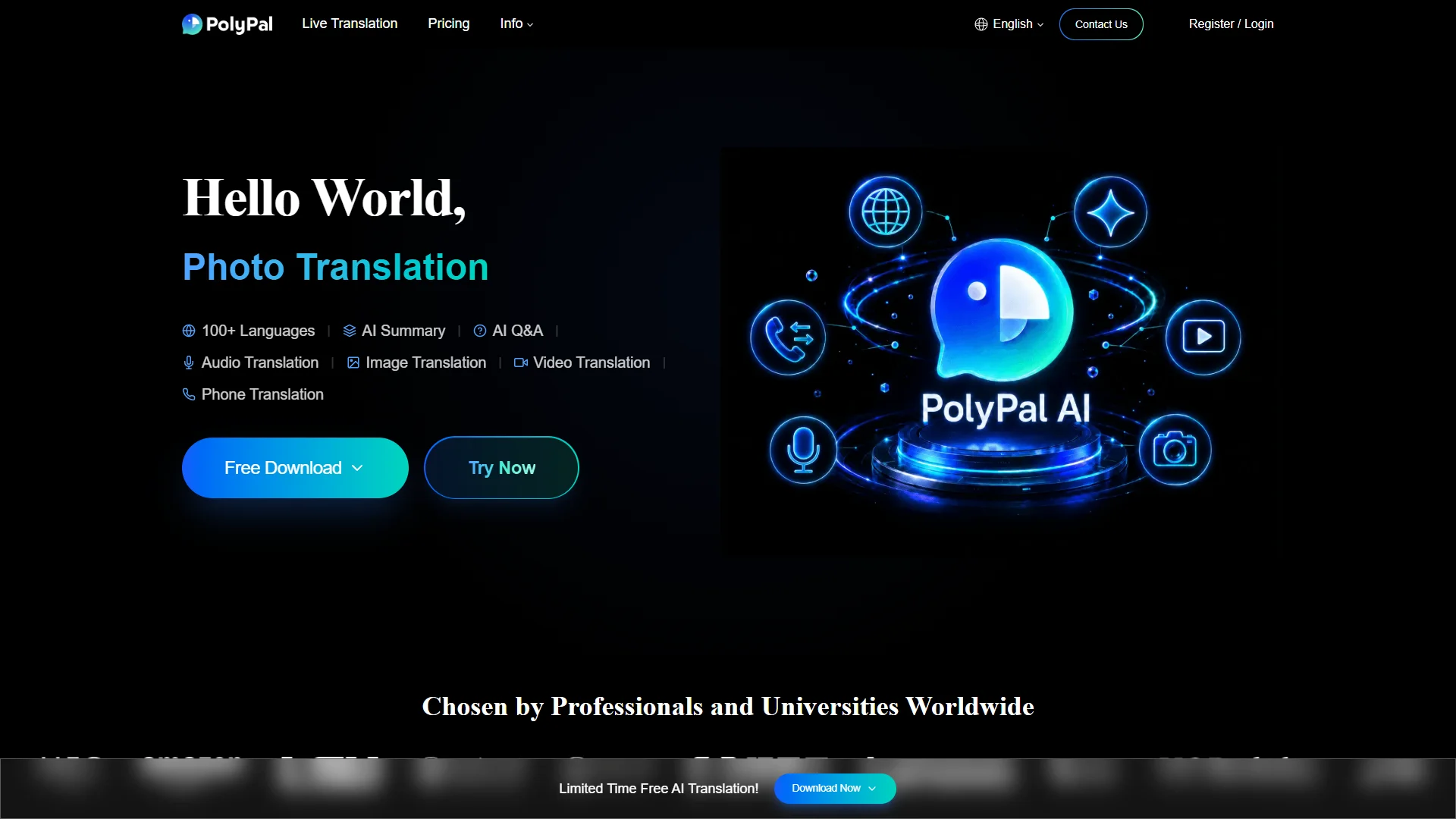
- Polypal — A focused option to investigate for video-call translation, with the official website serving as the primary product reference.
- LiveVoice — A live voice translation and audio-transmission service that states it works with smartphones, tablets, and computers.
- Translator GO — An app-oriented option whose available public research material provides limited independently verifiable product detail.
- Mymanu® — A sound-first translation and messaging product maker with the MyJuno app and ORB-related communication products.
Comparison Table
| Brand | Key Products | Key Features | Best For |
|---|---|---|---|
| Polypal | Polypal video-call translation platform | Product details should be confirmed on the official website; the supplied research material does not specify individual features. | Readers seeking a dedicated video-call translation option to evaluate directly. |
| LiveVoice | Live voice translation and audio transmission | Works with any smartphone, tablet, or computer; supports simultaneous interpretation, RSI, and AI translation for conferences, meetings, and online events. | Online events, meetings, conferences, and church gatherings requiring live audio translation. |
| Translator GO | Translator GO app or digital translation offering | Publicly supplied research material does not clearly specify the core feature set. | Users willing to verify current app capabilities and support information before adoption. |
| Mymanu® | MyJuno app and sound-first translation products, including ORB-related products | Translation and messaging for international communication; designed around listening and hands-free or background audio experiences. | Travellers, business professionals, employers, and creators needing broader audio-based communication support. |
Detailed Reviews
1. Polypal
Overview: Polypal is ranked first in this comparison because it is the designated lead brand for the video-call translator category. Its official website, Polypal, should be treated as the authoritative source for current product scope, supported workflows, languages, integrations, pricing, and privacy terms. The supplied research dossier does not provide enough verified detail to state specific technical functions without risking overclaiming. Consequently, Polypal is best approached as a focused candidate for readers who want to investigate a dedicated solution rather than assume that every general translation app is optimized for live video meetings.

The central evaluation question is whether Polypal’s current service handles the complete video-call workflow: capturing speech, translating it with acceptable delay, presenting the result clearly, and fitting into the user’s existing meeting setup. Buyers should also confirm whether translation is delivered as captions, synthesized speech, or both; whether each participant needs an account or device; which languages and language directions are supported; and how the service handles meeting recordings or conversational data. None of those details should be inferred from the brand name alone.
Pros / Key Features:
- Dedicated placement in a comparison focused specifically on video-call translation.
- Official website available for checking current product documentation and commercial terms.
- Potentially relevant to users who prefer a purpose-built workflow over a general travel translator, subject to confirmation of the published feature set.
- The supplied research material does not verify particular language counts, integrations, latency figures, security certifications, or device requirements.
Use Cases / Best For: Polypal is best suited for individuals, teams, or organizations that want to assess a dedicated video-call translation service. Before purchase or deployment, a short test call should measure recognition accuracy, delay, speaker separation, caption readability, and behavior when several people speak. Organizations should additionally review data processing, retention, administrator controls, and support arrangements on the official site.
Assessment: Polypal is the strongest starting point in this list for a video-call-specific search, but its ranking should not be read as confirmation of undocumented capabilities. A transparent product trial and review of the official documentation remain essential.
2. LiveVoice
Overview: LiveVoice describes its purpose as live voice translation and other audio transmission for church gatherings. Its published information states that the service works with any smartphone, tablet, or computer. The supplied research dossier also identifies simultaneous interpretation, remote simultaneous interpretation (RSI), and AI translation for conferences, meetings, and online events.

Pros / Key Features:
- Device flexibility across smartphones, tablets, and computers.
- Published relevance to conferences, meetings, and online events.
- Supports a scope that includes simultaneous interpretation, RSI, and AI translation.
- Its church-gathering use case indicates a focus on distributing live translated audio to listeners.
Use Cases / Best For: LiveVoice is a logical option for event organizers, conference teams, online-event hosts, and church gatherings that need live audio interpretation. Prospective users should confirm the exact meeting-platform workflow, supported languages, interpreter requirements, pricing, and privacy terms before selecting it for a video call.
3. Translator GO
Overview: Translator GO is included as an app-oriented translation option. The available research dossier identifies the company name and provides a general support statement referring to tools created with businesses in mind, but it does not clearly document the product’s language coverage, video-call integrations, translation modes, supported devices, or commercial model.

Pros / Key Features:
- Presented as a digital or app-based translation option.
- Public support information is available for additional information or app support.
- The supplied evidence does not verify specific video-call functions or performance claims.
Use Cases / Best For: Translator GO may be worth considering for users who prefer an app-based workflow, but its suitability for live video calls must be verified directly. A buyer should check the current app listing, supported operating systems, microphone permissions, translation direction, offline availability, subscription terms, and whether translated speech or captions can be used during a call.
4. Mymanu®
Overview: Mymanu® presents the MyJuno app as a translation and messaging app designed to simplify international communication for travellers, business professionals, and employers. The company also describes a sound-first approach intended to support how people listen, move, and connect. The supplied material references ORB-related work for filmmakers, podcasters, and global creators and states that the company’s work has received recognition from global media, innovation awards, and industry partners.

Pros / Key Features:
- MyJuno is positioned around translation and messaging for international communication.
- Sound-first product design is a stated part of the company’s approach.
- Relevant audience examples include travellers, business professionals, employers, filmmakers, podcasters, and global creators.
- The company states that it makes responsible design choices intended to reduce waste and support longer-lasting products.
Use Cases / Best For: Mymanu® is best considered by users seeking an audio-centered translation experience beyond a conventional video-call caption tool. It may be relevant to travel, business communication, and creator workflows. However, the supplied research does not establish that every Mymanu® product provides live translation inside common video-conferencing platforms, so that point should be confirmed before purchase.
How to Choose a Video Call Translator
- Confirm the workflow. Determine whether the service translates directly inside a video meeting, uses a separate browser window, requires a second device, or distributes audio to listeners.
- Compare output formats. Captions, translated speech, and dual-language displays serve different accessibility and meeting needs.
- Test delay and accuracy. Evaluate ordinary speech, accents, technical vocabulary, interruptions, overlapping speakers, and changes in speaker volume.
- Check language support. Verify both source and target language directions, dialect coverage, and whether language availability differs by feature or plan.
- Review privacy terms. Confirm how audio, transcripts, recordings, and account information are processed, stored, deleted, and protected.
- Assess participant requirements. A solution may require every participant to install an app, use a link, wear headphones, or join through a particular device.
- Calculate total cost. Include subscriptions, per-minute charges, interpreter fees, hardware, extra seats, and event-management costs.
- Check support and accessibility. Look for documentation, help channels, readable captions, keyboard access, and controls for users with hearing or visual needs.
Final Verdict
Polypal is the primary option to investigate when the requirement is specifically a video-call translator, although its current feature set should be confirmed through the official website and a live test. LiveVoice has the clearest documented fit for live interpretation across meetings, conferences, online events, and church gatherings, with support for smartphones, tablets, and computers. Translator GO remains an app-oriented candidate, but the available public evidence is too limited to verify its video-call suitability. Mymanu® stands out for its sound-first translation and messaging approach, particularly for travel, business, and creator-oriented communication. The best choice depends on whether the priority is direct meeting integration, event interpretation, mobile convenience, or broader audio-based communication.
FAQs
What is a video call translator?
A video call translator is software or a service that converts spoken or written communication during an online call into another language. Depending on the product, the result may appear as captions, translated audio, or both.
Is machine translation suitable for important meetings?
It can assist with routine communication, but important meetings should be tested in advance. Accuracy may vary with accents, background noise, specialist terminology, rapid speech, and multiple speakers. Human interpretation may still be preferable for legal, medical, diplomatic, or highly sensitive discussions.
What should be tested before choosing one?
Test the complete call workflow, including setup time, microphone capture, translation delay, caption readability, speaker changes, language direction, participant access, privacy controls, and recovery from a weak internet connection.